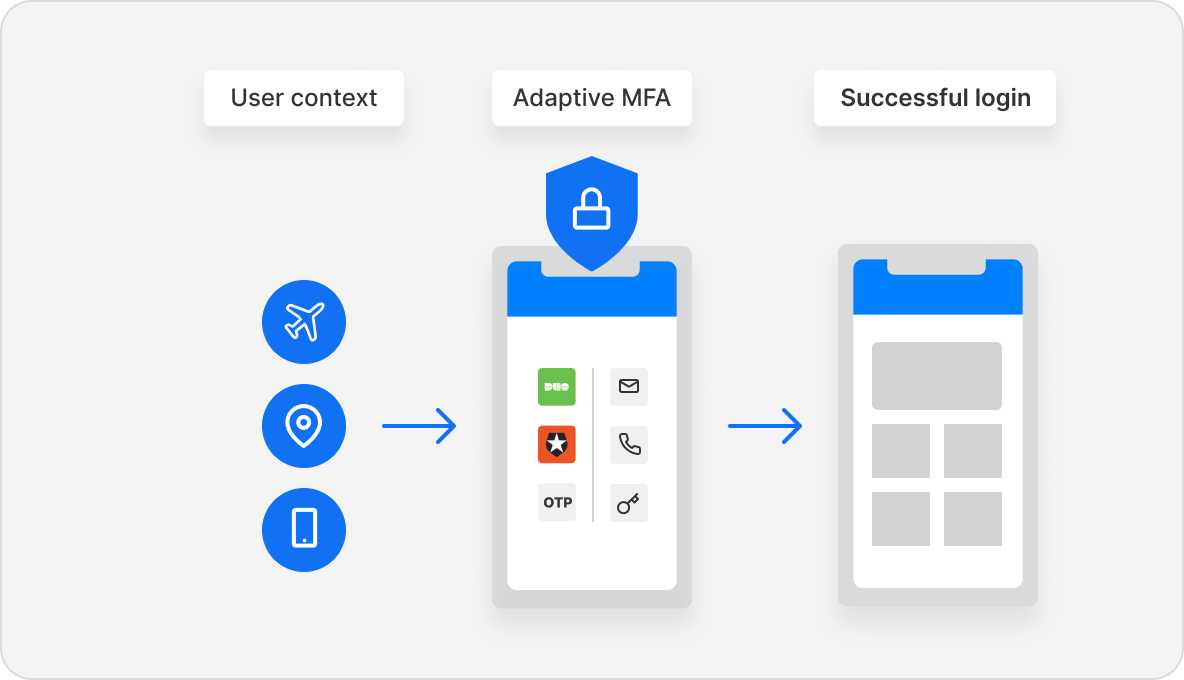
Auth0 is an identity management platform for developers and application teams. It gives users a platform to authenticate and authorize, providing secure access to applications, devices, and users. Auth0 aims to provide the simplicity, extensibility, and expertise to scale and protect any application, for any audience. Integrate Auth0 into any app, written in any language, and any framework.
$23
per month
PingOne from Ping Identity
Score5.4 out of 10
N/A
The PingOne Cloud Platform from Ping Identity in Denver, Colorado is an identity management and access solution (IAM) for enterprises. Features of the products include single sign-on, multi-factor authentication, user management with directory, provisioning and deprovisioning. The solution is presented as a comprehensive, standards-based platform that allows users and devices to securely access any service, application or API from any device. Designed for hybrid IT environments, it can be…
$20,000
per year
Pricing
Auth0
PingOne from Ping Identity
Editions & Modules
1,000 External Active Users
$23
per month
2,000 External Active Users
$57
per month
5,000 External Active Users
$114
per month
500 External Active Machines
$130
per month
10,000 External Active Users
$228
per month
20,000 External Active Users
$455
per month
50,000 External Active Users
1,138
per month
Over 50,000 External Active Users
Contact for quote
Enterprise
Contact for quote
Essential
$20,000
per year
Plus
$40,000
per year
Premium
Contact Sales
Offerings
Pricing Offerings
Auth0
PingOne from Ping Identity
Free Trial
Yes
Yes
Free/Freemium Version
Yes
No
Premium Consulting/Integration Services
Yes
No
Entry-level Setup Fee
Optional
No setup fee
Additional Details
—
Try PingOne for Customers for free. Sign up for a free 30-day trial of PingOne for customers.
More Pricing Information
Community Pulse
Auth0
PingOne from Ping Identity
Considered Both Products
Okta
No answer on this topic
Ping Identity
Verified User
Chose PingOne from Ping Identity
This solution is selected before my time so, not much influence ,but product allow to customized and require decent ping skills to configure the solution. Okta and Other solutions are well suited in this category with some positive and some negative capabilities. it must say …
A de minimis incentive was given to thank the reviewer for their time. The incentive was not used to bias or drive a particular response, nor was the incentive contingent on a positive endorsement. More Info
Great for user authentication and access priviledge management. We are using it for both our commercial and financial clients and Auth0 meets all the regulations and due diligence required to close deals with these enterprise customers. Given their tiered pricing structure, we don't see a scenario where Auth0 would not be appropriate for the solution it provides.
A de minimis incentive was given to thank the reviewer for their time. The incentive was not used to bias or drive a particular response, nor was the incentive contingent on a positive endorsement. More Info
Really like [this] solution, it fits our requirements 100%. There are unlimited possibilities to extend the product, either by creating additional adapters or selectors. We really like the policy management level in PingFederate. It's extremely helpful when we can specify customer journey per many different requirements like user location, application type etc. As well, both StepUp and TopDown authentication flows were implemented [easily].
A de minimis incentive was given to thank the reviewer for their time. The incentive was not used to bias or drive a particular response, nor was the incentive contingent on a positive endorsement. More Info
Based on open standards, we can use as much or as little of the Ping suite as we like, depending on which other technologies we've already implemented.
Continuous innovation and product enhancements have ensured their products continue to meet our rapidly evolving needs.
Ping Identity has been an outstanding partner, starting with the RFP process and continuing to this day, years after the sale. They are focused on our success at every level of the company and are highly responsive to our needs, issues, and product suggestions.
Price point for ALL features can get a bit pricey. But they have a startup plan which helps big time. Developer plans start at $23/mo and do not include all features.
Actions, rules, hooks, and email customization are great features, but the UI is a bit tough sometimes, not very responsive to screen size and code editors are cut off in a difficult place to maneuver.
A de minimis incentive was given to thank the reviewer for their time. The incentive was not used to bias or drive a particular response, nor was the incentive contingent on a positive endorsement. More Info
A de minimis incentive was given to thank the reviewer for their time. The incentive was not used to bias or drive a particular response, nor was the incentive contingent on a positive endorsement. More Info
A de minimis incentive was given to thank the reviewer for their time. The incentive was not used to bias or drive a particular response, nor was the incentive contingent on a positive endorsement. More Info
- integration and ease of implementation - great over all product support specially for passkey biometric authentication -Auth0 is very reliable to use their API integration for security verification. It provides best API to integrate our website and application with Single Sign In option and two step verification option. Sales and technical teams are always there to provide support
A de minimis incentive was given to thank the reviewer for their time. The incentive was not used to bias or drive a particular response, nor was the incentive contingent on a positive endorsement. More Info
Easy to use; all UI's are user friendly and easy to learn.[The] possibility to use API is [a] big value as well. We really like integration with CyberArk; with it we can manage privileged accounts according to company standards without breaking any rules, and we can be 100% sure that only approved persons will have administrative access.
There isn't a clear method to get a hold of support when trouble arises if you're on their standard plan. You can file a support ticket and they generally are responsive. I've often been able to find similar questions to the questions I've had when it comes to support in their ticket history, however, some have been closed without a satisfactory conclusion for the original poster.
A de minimis incentive was given to thank the reviewer for their time. The incentive was not used to bias or drive a particular response, nor was the incentive contingent on a positive endorsement. More Info
Ping's support is willing and attentive, but if I am in a position to engage them I am often at a point where most of the usual support engineers would not be in a position to answer the questions I have. However, Ping has been more than willing to engage their product and development teams with our organization as we take advanced deployment and use case challenges to them.
A de minimis incentive was given to thank the reviewer for their time. The incentive was not used to bias or drive a particular response, nor was the incentive contingent on a positive endorsement. More Info
We went with Auth0 over Okta due to price concerns and the overall simplicity of Auth0. We chose Auth0 over Amazon Cognito because Cognito has very poor documentation and client library support. Auth0 offers a service that hits the sweet spot for organizations with small development teams and limited finances.
A de minimis incentive was given to thank the reviewer for their time. The incentive was not used to bias or drive a particular response, nor was the incentive contingent on a positive endorsement. More Info
Two-way authentication and ease of use. I've used several applications that just email a link but never ask for a verification code. By entering the verification code you are sure that the site is safe, secured, and reliable. Using Ping, we can ensure no one other than you will access the application using your credential as you can log in only after you confirm using the verification code that you receive on your personal email or device.
A de minimis incentive was given to thank the reviewer for their time. The incentive was not used to bias or drive a particular response, nor was the incentive contingent on a positive endorsement. More Info
A de minimis incentive was given to thank the reviewer for their time. The incentive was not used to bias or drive a particular response, nor was the incentive contingent on a positive endorsement. More Info
A de minimis incentive was given to thank the reviewer for their time. The incentive was not used to bias or drive a particular response, nor was the incentive contingent on a positive endorsement. More Info