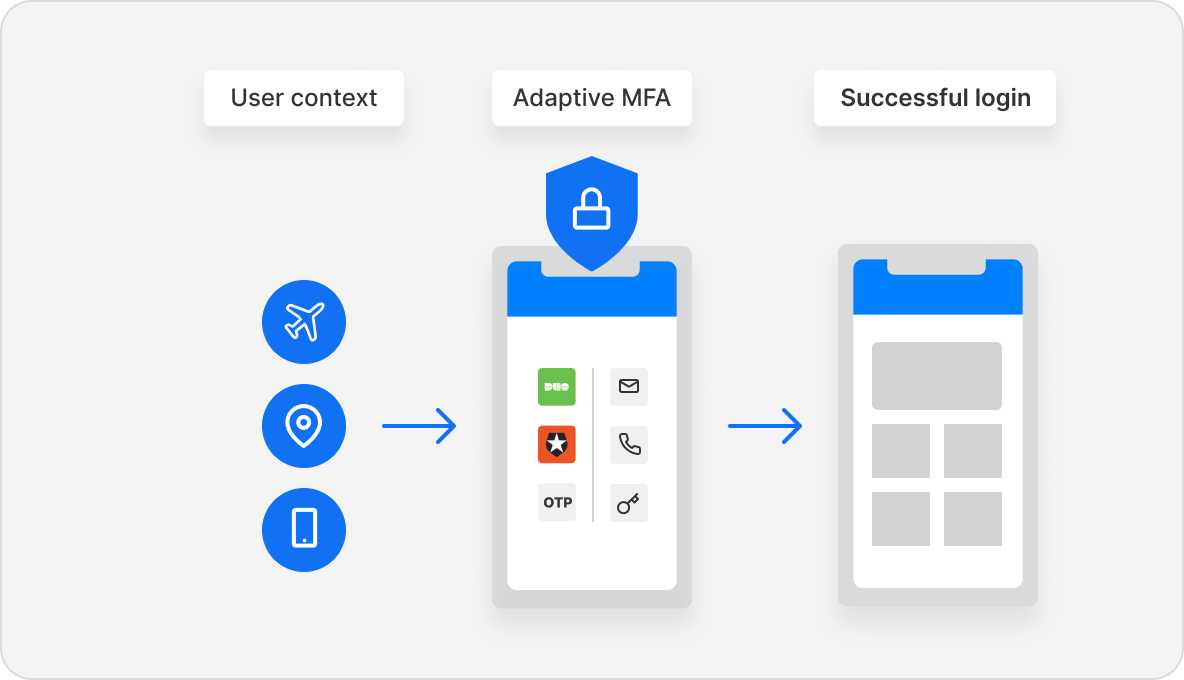
Auth0 is an identity management platform for developers and application teams. It gives users a platform to authenticate and authorize, providing secure access to applications, devices, and users. Auth0 aims to provide the simplicity, extensibility, and expertise to scale and protect any application, for any audience. Integrate Auth0 into any app, written in any language, and any framework.
$23
per month
Hypersocket
Score 8.0 out of 10
N/A
Hypersocket (formerly Nervepoint) enables organizations to efficiently manage and administer end users and their access to disparate systems by empowering end users to manage their own accounts across multiple systems both on-premise and in the cloud, while allowing IT to gain control over user sprawl, cut support and gain in-depth business insight.
N/A
Pricing
Auth0
Hypersocket
Editions & Modules
1,000 External Active Users
$23
per month
2,000 External Active Users
$57
per month
5,000 External Active Users
$114
per month
500 External Active Machines
$130
per month
10,000 External Active Users
$228
per month
20,000 External Active Users
$455
per month
50,000 External Active Users
1,138
per month
Over 50,000 External Active Users
Contact for quote
Enterprise
Contact for quote
No answers on this topic
Offerings
Pricing Offerings
Auth0
Hypersocket
Free Trial
Yes
Yes
Free/Freemium Version
Yes
Yes
Premium Consulting/Integration Services
No
No
Entry-level Setup Fee
Optional
No setup fee
Additional Details
—
—
More Pricing Information
Community Pulse
Auth0
Hypersocket
Features
Auth0
Hypersocket
Identity Management
Comparison of Identity Management features of Product A and Product B
Auth0 is very well suited for situations where a JSON web token can be used for authorizing APIs, websites, and mobile devices. It's especially useful if the JWT validation can happen at a gateway layer. It's especially useful if you only need to verify the user's email address or mobile number as the passwordless login is easy to implement.
It has great flexibility with multiple domains, and the ability to sync or not sync passwords between primary and secondary accounts. I'd like to see a more granular set of permissions for the help desk role tied to an OU path rather than a whole directory. You can [create this] by defining multiple directories based on OUs but is less flexible this way.
Auth0 can be somewhat limiting if you want a lot of control over the design of your authentication flow. Custom branding can be done, but it may be limited depending on how you plan to integrate.
The Auth0 API documentation has proven confusing at times; a single API endpoint's behaviour will change based on inputs and configured settings (e.g. offline_access). Consequently fields that are advertised as being returned in a response might not be there or have different values if you miss a key detail and it can be difficult to debug when this happens. All information required is available in the documentation but requires some digging.
The toggle to switch tenants feels a bit odd, it works, but I've had a few instances where I didn't realize I was on a staging tenant looking for something that was on the production tenant. Not a big deal, just something to watch out for.
Help-Desk functionality similar to OneIdentity Self-Service Password Manager, as it provides additional users that do not require administrative access to assist with managing end-users who may have locked themselves out of HyperSocket Access Manager by forgetting their own security questions.
Too many features which become unusable and feel like the payment plans are not flexible since it's an all-in-one product with one price. It is not necessarily a bad thing as most subscription-based pricing forces a buyer to pay more for an integral service that is only available on the highest price-plan. You really do get what you pay for, but we found many of our use-case scenarios limited the product.
This isn't necessarily against the product, just a personal opinion around Multi-Factor authentication which is always primarily driven mobile devices. Not all companies or end-users have access to a multi-factor device, (or in our case, are allowed to have access to a cell phone while servicing members/clients). This creates a shortfall to allow multi-factor functionality to extend to all users unless there are hardware tokens, which can be miss placed or left out more easily as most users don't treat it the same way they would their personal smartphone.
- integration and ease of implementation - great over all product support specially for passkey biometric authentication -Auth0 is very reliable to use their API integration for security verification. It provides best API to integrate our website and application with Single Sign In option and two step verification option. Sales and technical teams are always there to provide support
There isn't a clear method to get a hold of support when trouble arises if you're on their standard plan. You can file a support ticket and they generally are responsive. I've often been able to find similar questions to the questions I've had when it comes to support in their ticket history, however, some have been closed without a satisfactory conclusion for the original poster.
Auth0 is non-evasive and does not require software download. It is user friendly, seamless, and doesn't require additional actions on the part of the user. IBM Trusteer is none of these things and is based on a technology stack that cannot scale in the same way as Auth0. We believe Auth0 provides a superior solution and is well suited for our own technology stack.
One Identity is a great self-service password management system, however, it is limited to just that. As it stacks against the competition, Hypersocket isn't modular, it's an all-in-one which most other systems aren't. One Identity is what we use today for self-service, and migrated to KeePass for users centralized password manager. This probably wasn't the best move but this was all driven by cost and budgetary constraints.
Development time has been allocated to the more core parts of our business.
We are confident in the security of our user's accounts and their data.
Auth0's login flows are customizable which means that we don't have to worry about users being confused when logging in/changing their passwords, and we didn't event have to spend that much time configuring this. (Full in-house development for login could take weeks to get right.)
As with any IT Service or Solution, the investment will always be seen as a sunk cost. The only ROI would be the time and resources spent elsewhere rather than with Password Management through an IT Department or similar department. I found that the time spent on password management was about the same, as many users who are frequently forgetting a password are also forgetting their security question & answers.
There are some positives, as it was able to help manage the bulk of their non-windows passwords or passwords related to another online service. The centralized password manager doesn't feel like a true single sign-on but for most users, it replaces a hand-written copy they have taped to a monitor.
It can help with automating some of the active directory workflows with its own user provisioning functionality. Took more time to set up than it was to manage on its own.