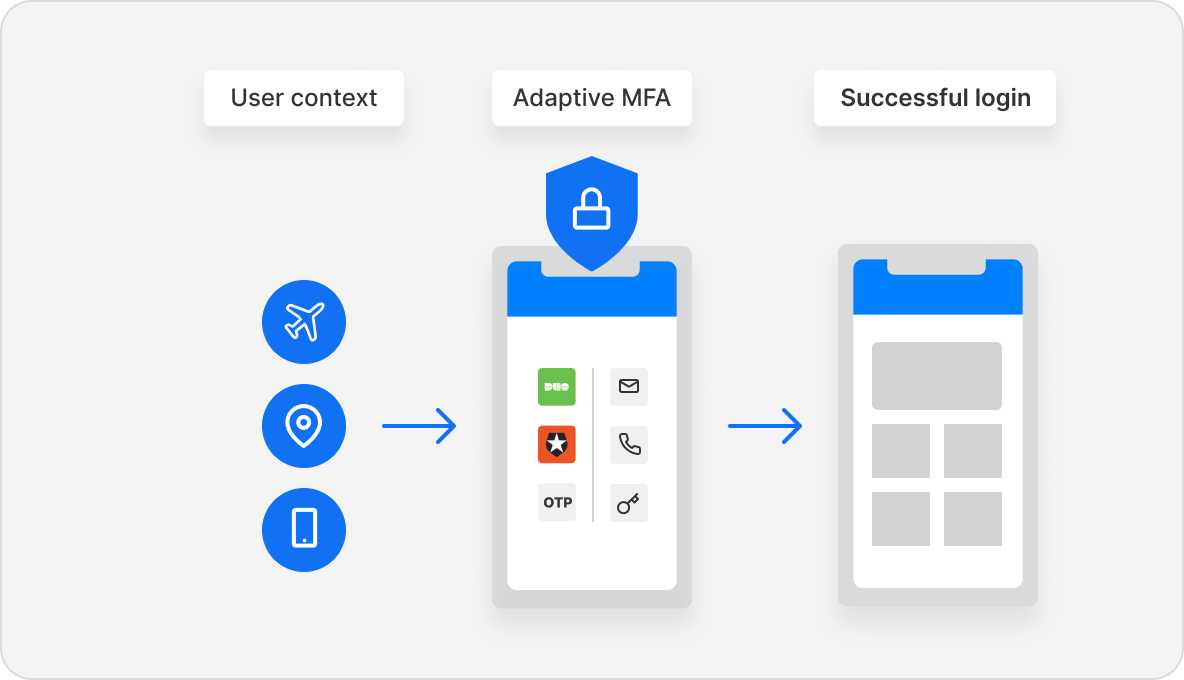
Auth0 is an identity management platform for developers and application teams. It gives users a platform to authenticate and authorize, providing secure access to applications, devices, and users. Auth0 aims to provide the simplicity, extensibility, and expertise to scale and protect any application, for any audience. Integrate Auth0 into any app, written in any language, and any framework.
$23
per month
Cisco Duo
Score9.5 out of 10
N/A
Cisco Duo is a two-factor authentication system (2FA), acquired by Cisco in October 2018. It provides single sign-on (SSO) and endpoint visibility, as well as access controls and policy controlled adaptive authentication.
A de minimis incentive was given to thank the reviewer for their time. The incentive was not used to bias or drive a particular response, nor was the incentive contingent on a positive endorsement. TR verified that a representative sample of customers was invited. More Info
Great for user authentication and access priviledge management. We are using it for both our commercial and financial clients and Auth0 meets all the regulations and due diligence required to close deals with these enterprise customers. Given their tiered pricing structure, we don't see a scenario where Auth0 would not be appropriate for the solution it provides.
A de minimis incentive was given to thank the reviewer for their time. The incentive was not used to bias or drive a particular response, nor was the incentive contingent on a positive endorsement. More Info
It is a very compete and solid solution Once it is in place, and you have configured the different settings and policies it is consistent and works well. It does take some time to work the kinks out. We had a Cisco support provider assist us while we stepped through the process of getting it set up.
A de minimis incentive was given to thank the reviewer for their time. The incentive was not used to bias or drive a particular response, nor was the incentive contingent on a positive endorsement. TR verified that a representative sample of customers was invited. More Info
A de minimis incentive was given to thank the reviewer for their time. The incentive was not used to bias or drive a particular response, nor was the incentive contingent on a positive endorsement. More Info
We use Cisco Duo with different type of device and application, but we never face any difficulties to integrate Cisco Duo with any of them.
We integrated Cisco Duo with some of our active directory and some of the OS are quite old but Cisco Duo works totally fine with them.
The end user application is very easy to use. We never had any complain from non tech team members of having trouble of using Cisco Duo.
There are several authentication methods available rather than passcode. I personally like the push notification which is always on time and quite fast.
A de minimis incentive was given to thank the reviewer for their time. The incentive was not used to bias or drive a particular response, nor was the incentive contingent on a positive endorsement. More Info
Price point for ALL features can get a bit pricey. But they have a startup plan which helps big time. Developer plans start at $23/mo and do not include all features.
Actions, rules, hooks, and email customization are great features, but the UI is a bit tough sometimes, not very responsive to screen size and code editors are cut off in a difficult place to maneuver.
A de minimis incentive was given to thank the reviewer for their time. The incentive was not used to bias or drive a particular response, nor was the incentive contingent on a positive endorsement. More Info
Documentation is oftentimes missing key information for proper implementation. This is circumvented by reading third-party guides or contacting support for additional details.
They do not push Fail-Closed as much as I think they should. Fail-Open is fairly trivial to bypass and it should be made known to the customer during setup how much this will affect overall security.
More vendor integration is something that is always craved by administrators. There are so many third-parties to integrate with.
A de minimis incentive was given to thank the reviewer for their time. The incentive was not used to bias or drive a particular response, nor was the incentive contingent on a positive endorsement. More Info
A de minimis incentive was given to thank the reviewer for their time. The incentive was not used to bias or drive a particular response, nor was the incentive contingent on a positive endorsement. More Info
There are a lot of competing solutions on the market; however, Duo "just works", and there is little to no learning curve for the new members to be acclimated to it. As long as that continues I see it as the preferred option moving forward
A de minimis incentive was given to thank the reviewer for their time. The incentive was not used to bias or drive a particular response, nor was the incentive contingent on a positive endorsement. TR verified that a representative sample of customers was invited. More Info
- integration and ease of implementation - great over all product support specially for passkey biometric authentication -Auth0 is very reliable to use their API integration for security verification. It provides best API to integrate our website and application with Single Sign In option and two step verification option. Sales and technical teams are always there to provide support
A de minimis incentive was given to thank the reviewer for their time. The incentive was not used to bias or drive a particular response, nor was the incentive contingent on a positive endorsement. More Info
La interfaz es intuitiva y fácil de navegar, lo que permite a los usuarios administrar sus dispositivos y acceder a las políticas sin problemas. La integración con las aplicaciones SSO y SaaS facilita aún más el proceso de acceso, mejorando la experiencia del usuario.
A de minimis incentive was given to thank the reviewer for their time. The incentive was not used to bias or drive a particular response, nor was the incentive contingent on a positive endorsement. More Info
In the last 5+ years we've been using Duo, there may have been 1 outage that impacted us. We do receive periodic notifications of issues but, for the most part, they impact carriers or functionality that we either don't use, or do not care about.
There isn't a clear method to get a hold of support when trouble arises if you're on their standard plan. You can file a support ticket and they generally are responsive. I've often been able to find similar questions to the questions I've had when it comes to support in their ticket history, however, some have been closed without a satisfactory conclusion for the original poster.
A de minimis incentive was given to thank the reviewer for their time. The incentive was not used to bias or drive a particular response, nor was the incentive contingent on a positive endorsement. More Info
I have not needed direct support for Cisco Secure Access by Duo as I have not had a problem with it, but I have full confidence that the support is outstanding. It is now a core component of the corporate technology stack - a problem would mean a serious degradation in the ability of the company to function.
A de minimis incentive was given to thank the reviewer for their time. The incentive was not used to bias or drive a particular response, nor was the incentive contingent on a positive endorsement. More Info
Implementation was straight forward and you can isolate different scenarios in order to test new application setup or add to an existing setup. Gui interface is pretty easy to understand and follow. I had no experience with Duo and still manage to easily set up new policies and rules.
A de minimis incentive was given to thank the reviewer for their time. The incentive was not used to bias or drive a particular response, nor was the incentive contingent on a positive endorsement. TR verified that a representative sample of customers was invited. More Info
We went with Auth0 over Okta due to price concerns and the overall simplicity of Auth0. We chose Auth0 over Amazon Cognito because Cognito has very poor documentation and client library support. Auth0 offers a service that hits the sweet spot for organizations with small development teams and limited finances.
A de minimis incentive was given to thank the reviewer for their time. The incentive was not used to bias or drive a particular response, nor was the incentive contingent on a positive endorsement. More Info
I would fully expect a competitor like Okta or any other multifactor mechanic to function pretty similarly, and I hesitate to say duos the best. I think the idea is that it's a simple concept, but it does it well. So I haven't evaluated any myself outside of duo, but I'm also not in the market and I don't feel like we need to go shopping for something else.
A de minimis incentive was given to thank the reviewer for their time. The incentive was not used to bias or drive a particular response, nor was the incentive contingent on a positive endorsement. TR verified that a representative sample of customers was invited. More Info
A de minimis incentive was given to thank the reviewer for their time. The incentive was not used to bias or drive a particular response, nor was the incentive contingent on a positive endorsement. More Info
A de minimis incentive was given to thank the reviewer for their time. The incentive was not used to bias or drive a particular response, nor was the incentive contingent on a positive endorsement. TR verified that a representative sample of customers was invited. More Info