Australian company Atlassian offers Bamboo, a continuous integration server.
$1,200
Octopus Deploy
Score 10.0 out of 10
Mid-Size Companies (51-1,000 employees)
Australian company Octopus Deploy offers their eponymous automated deployment and release management software that integrates with the user's preferred CI server and adds deployment & ops automation capabilities. Octopus Deploy enables developers, release managers, and operations folks to bring all automation into a single place. The vendor states that by reusing configuration variables, environment definition, API keys, connection strings, permissions, service principals, and automation logic,…
$12
Pricing
Atlassian Bamboo
Octopus Deploy
Editions & Modules
1 Remote Agent
$1200
5 Remote Agents
$3200
10 Remote Agents
$5840
25 Remote Agents
$11,600
100 Remote Agents
$23,280
250 Remote Agents
$58,160
500 Remote Agents
$87,280
1000 Remote Agents
$133,840
2000 Remote Agents
$187,380
Cloud
Free 30 day trial
unlimited targets/users/projects
Server
Free 30 day trial
unlimited targets/users/projects
Enterprise
Starting at $18 per month
Enterprise
Starting at $18 per month
Server
Starting at $12 per month
Cloud
Starting at $12 per month
Offerings
Pricing Offerings
Atlassian Bamboo
Octopus Deploy
Free Trial
No
Yes
Free/Freemium Version
No
Yes
Premium Consulting/Integration Services
No
No
Entry-level Setup Fee
No setup fee
Optional
Additional Details
—
Octopus Server edition is available as a 30 day free trial on our unlimited tier for any scenario, including production, and commercial use. After the trial period ends you can keep your working configuration and upgrade to a paid license and continue deploying uninterrupted.
Octopus Cloud is an alternative that is hosted by us, and is also available as a 30 day unlimited trial. No credit card is needed to create a Octopus Cloud trial instance. You can convert the Cloud trial to a paid instance at any time during or after the trial period, and keep all of your instance configuration.
Octopus also offers an Enterprise tier which offers advanced features for teams at scale including, advanced high availability, insights & DORA metrics, ServiceNow & Jira Service Management integration, unlimited instances, 24/7 support & service credits, and a Customer Success Manager.
Volume discounts are available above 500 targets, and temporary bursting for certain scenarios is supported.
Large companies will find it particularly useful, but smaller companies and independent developers will not be able to afford the cost, and will not see many advantages compared to using an open source solution. However, having some software to handle continuous integration build servers as well as deployments, and doing this consistently between products, is absolutely essential.
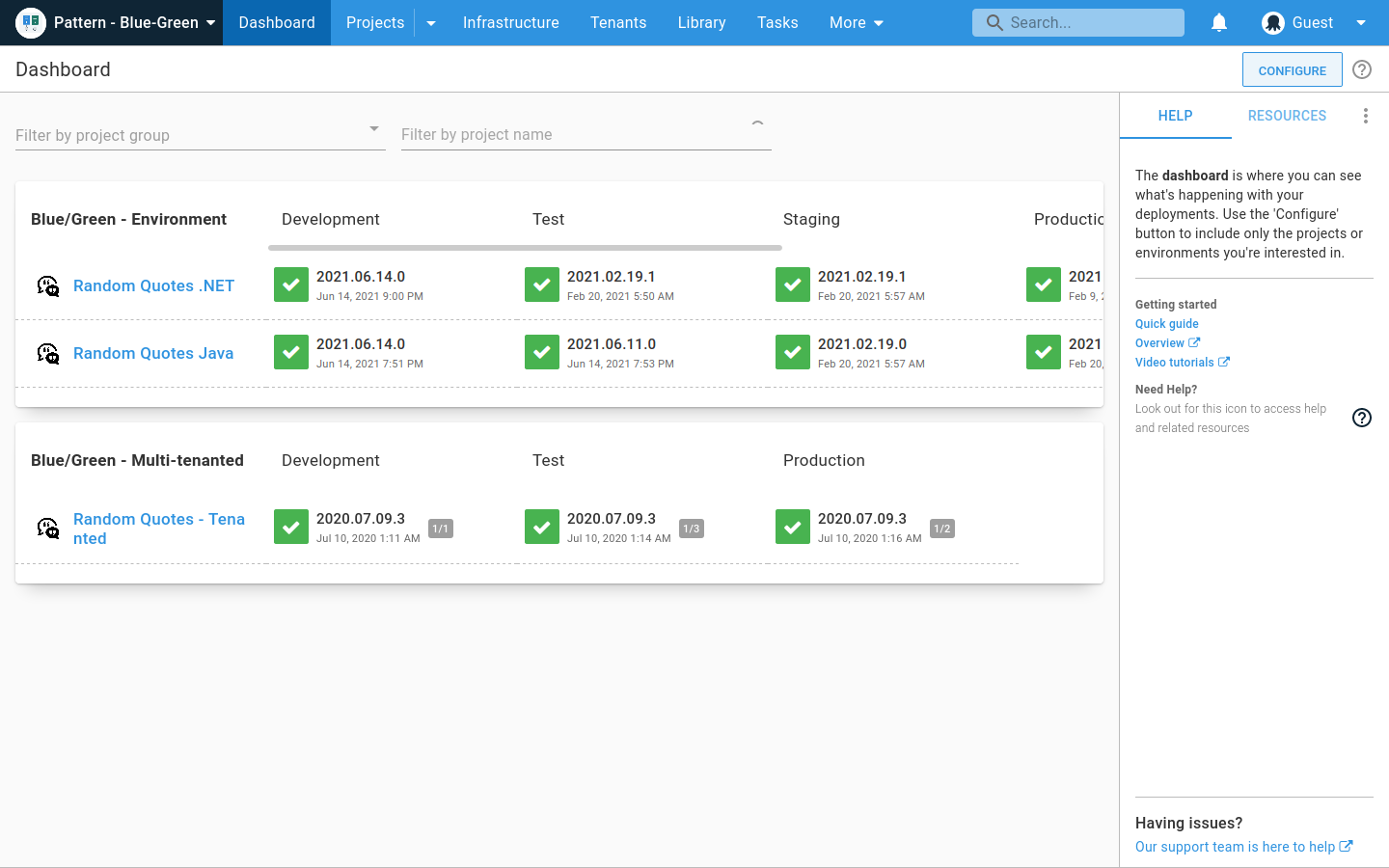
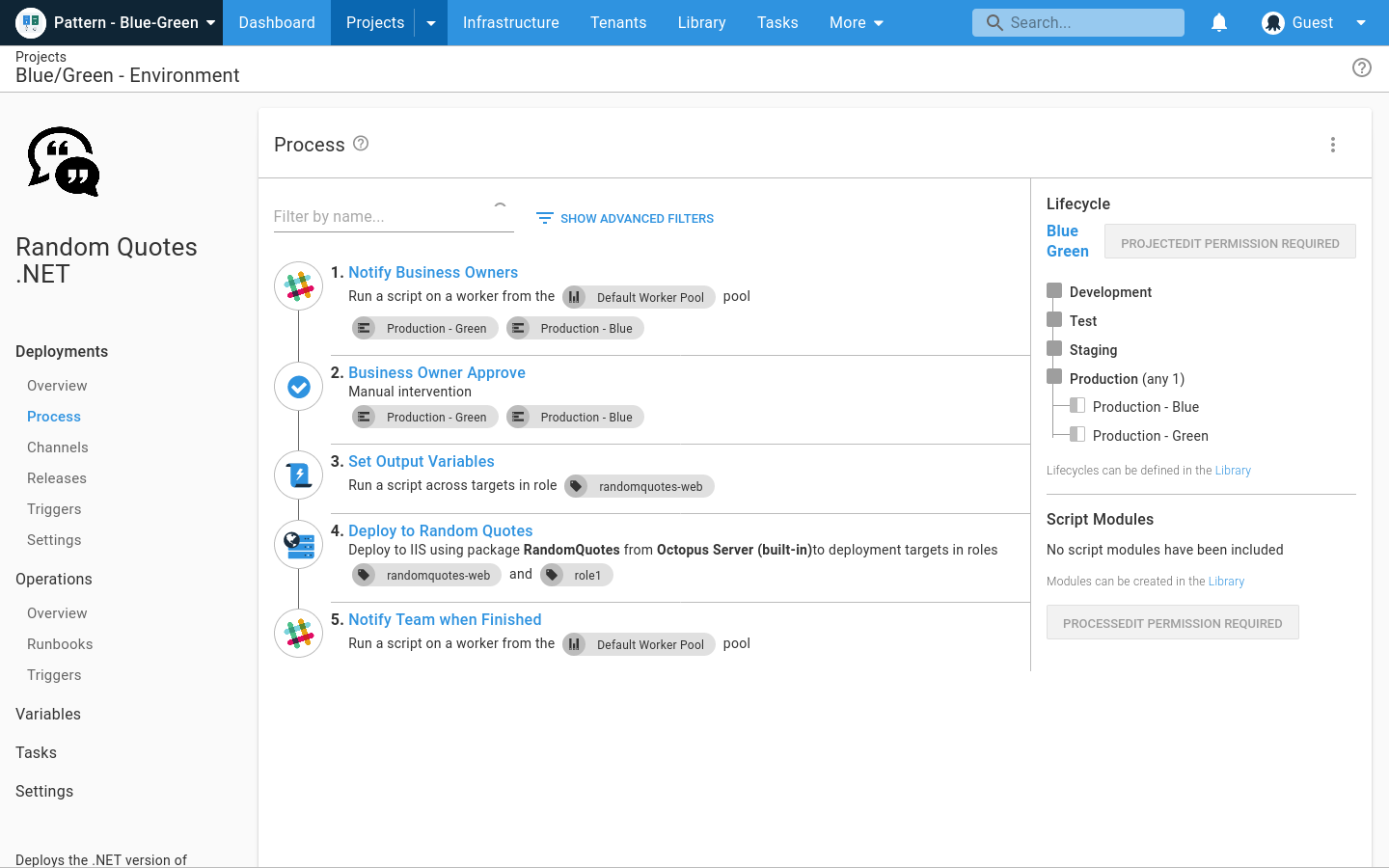
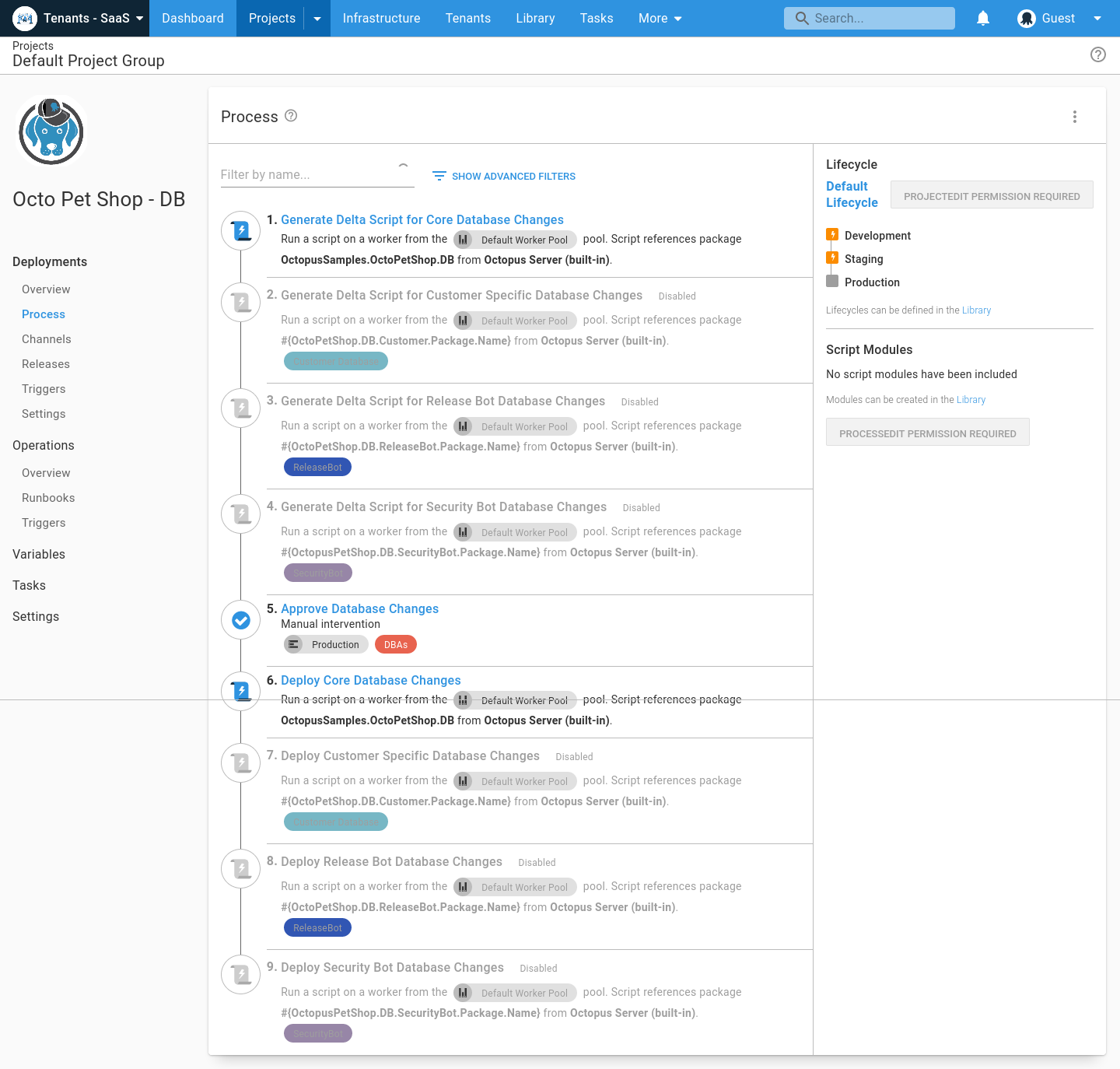
The ability to manage different stages and define a workflow is very useful for ops troubleshooting as well as deployment. You can see which version each environment has for each project, and promote or redeploy versions.
You can view deployment logs and dig deep into problems or long deployment steps.
Finding old releases can be a pain, and there isn't a good way to compare releases.
It does not really lend itself well to viewing what the content of a release is further than the version number. Ideally, you would be able to tie a deployment to the builds from the build server as well as specific commits from source control.
Continuous Deployment - you can use Bamboo to automatically build and deploy whenever there are changes in the source code.
Continuous Integration - by integrating the automated tests and the integration tests before deploying you make sure you know immediately if the latest code fits into the whole scheme of apps.
Integration with Jira and Bitbucket.
Flexibility with the program language used for builds: Maven, Ant, PowerShell, any command line tools.
Many different platforms, languages, and operating systems are supported. You can deploy to your own server or the cloud. You can deploy to Windows, Linux, etc.
Many different "step templates" are included, which make it very easy to deploy what you want, how you want. Such as deploying over SSH, FTP, etc.
Support is very responsive and personable. You won't just be talking to a robot or a script. They will either solve your problem or understand it enough to solve it in a future release.
Their documentation is well thought-out and very helpful. I have found very few missing pieces.
Support for non-Microsoft applications needs to be improved to bring it on par with other comparable automation tools.
It doesn't yet provide integration options with other IT management tools like JIRA and HP Support to implement continuous delivery and true DevOps processes.
Support for AWS/Azure has been included very recently and it's not still very mature and feature rich and is expected to improve further in upcoming releases.
Bamboo offers solid usability for teams looking for an integrated, scalable CI/CD solution, especially those using Atlassian tools. Its interface is intuitive for existing Atlassian users, and its focus on deployment automation makes it a strong option for continuous delivery. However, its complexity and cost may pose challenges for small teams or those new to CI/CD. Overall, Bamboo’s usability shines in environments where ease of integration and streamlined workflows are prioritized. Still, it may require more effort for teams unfamiliar with its setup or without dedicated resources.
Some functionality feels slightly hidden in the menu system. For example: script modules are in the same menu as packages, where I feel that are not related entities. One is code for the deployment, the other is the thing that you are deploying...
Octopus Deploy is a software that runs very effectively, is easy to use, does not require such a high learning curve, provides the necessary tools to carry out the functions it offers, making it a very flexible software, it also allows that can be configured according to the needs of the user and provides integrations with other very advantageous tools since they are carried out in a very favorable way.
Support for Bamboo has started lack a little over the years. Atlassian has been moving more towards Bitbucket Pipelines and away from the on-premise install of Bamboo. While the tool is still great, it may take a little bit of time to get a question answered by official support.
Octopus Deploy support has always been there for us, even when using the free tier, we get responsive hands-on help. We haven't needed to use that level of support since the documentation is clearly written, and help is readily available within the interface itself. Using Octopus Deploy is a truly joyful experience.
We chose Bamboo over Jenkins for 2 reasons - one, for its tight integration amongst all the products in the tool suite. We find explicit value in the traceability from JIRA issues all the way down to the Bamboo build that was triggered by the check in of those issues. The second reason was for support - we didn't want the burden of figuring out how to support Jenkins in our production environment, as can be the case with so many open source products.
Octopus Deploy was the obvious choice at the time, its strong .net support, robustness, ease of use, and integration into an existing process was a big plus. Also, Octopus Deploy was kind enough to give my organization a not for profit community licence. In addition, the product comes from a local Brisbane based company and it is always good to support local businesses when you can.
Any automated deployment process will save your company a ton of money on testing and bugs. When you don't automate your deployments, you can't be certain that what you are moving between environments is the exact same code with the same or appropriate configuration. What you tested might not be what got deployed.
We've saved a lot of money using Octopus over the mostly manual process we were using before. We've removed a lot of the errors that come from manual, human intervention.
Octopus has also allowed us to accomplish more with fewer people. It is easy to bring new people up to speed on the deployment process, and we can be confident of success after very little training.