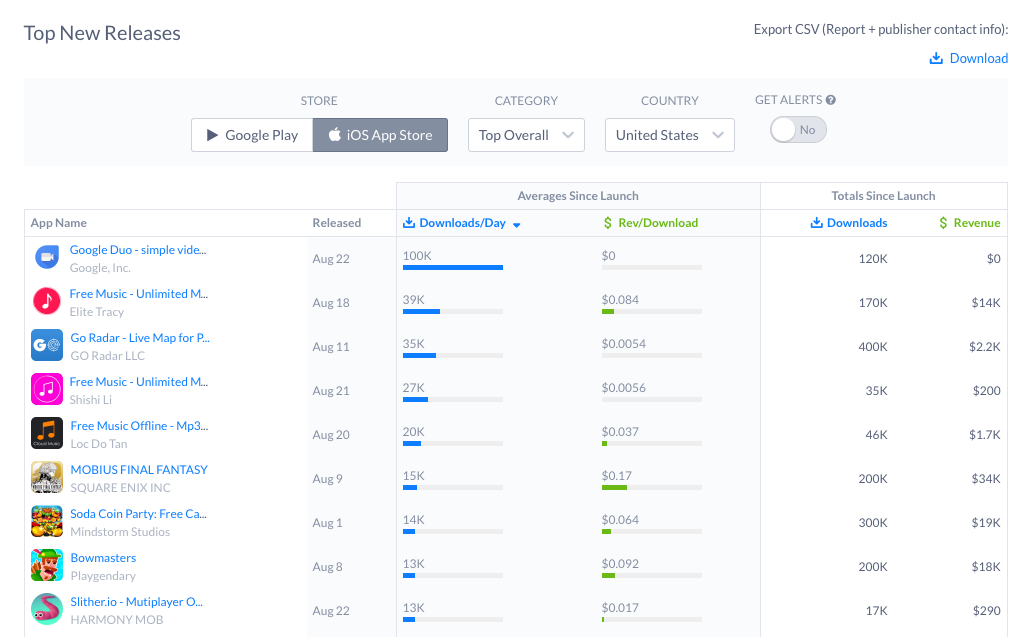
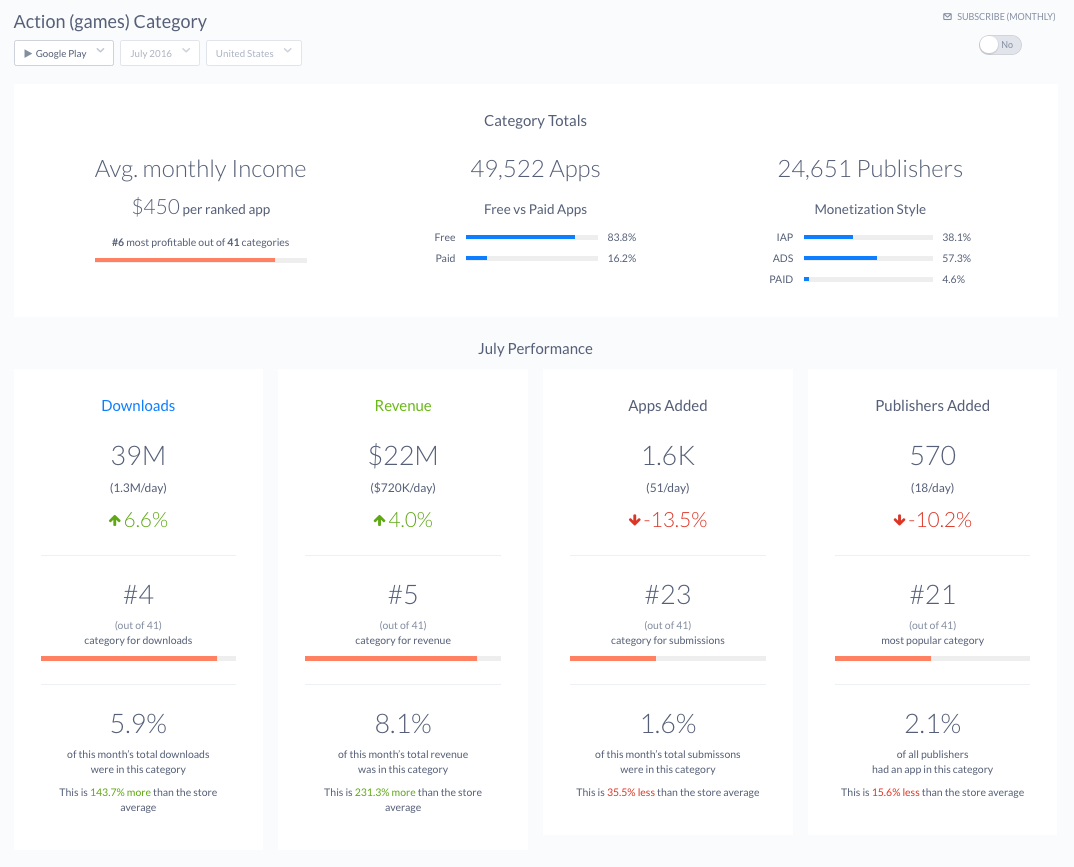
Apptopia offers mobile app data and market intelligence in a web tool. Mobile publishers and developers, service providers, and investors use Apptopia on a daily basis to understand and monitor competitors, inform business strategies, and identify emerging consumer interests and trends.
Download, revenue, and usage estimates are available for every ranked app and publisher in the world. According to the vendor, Apptopia is unique in its ability to also offer SDK recognition and…
$79
month
Webtrends Analytics
Score 4.4 out of 10
N/A
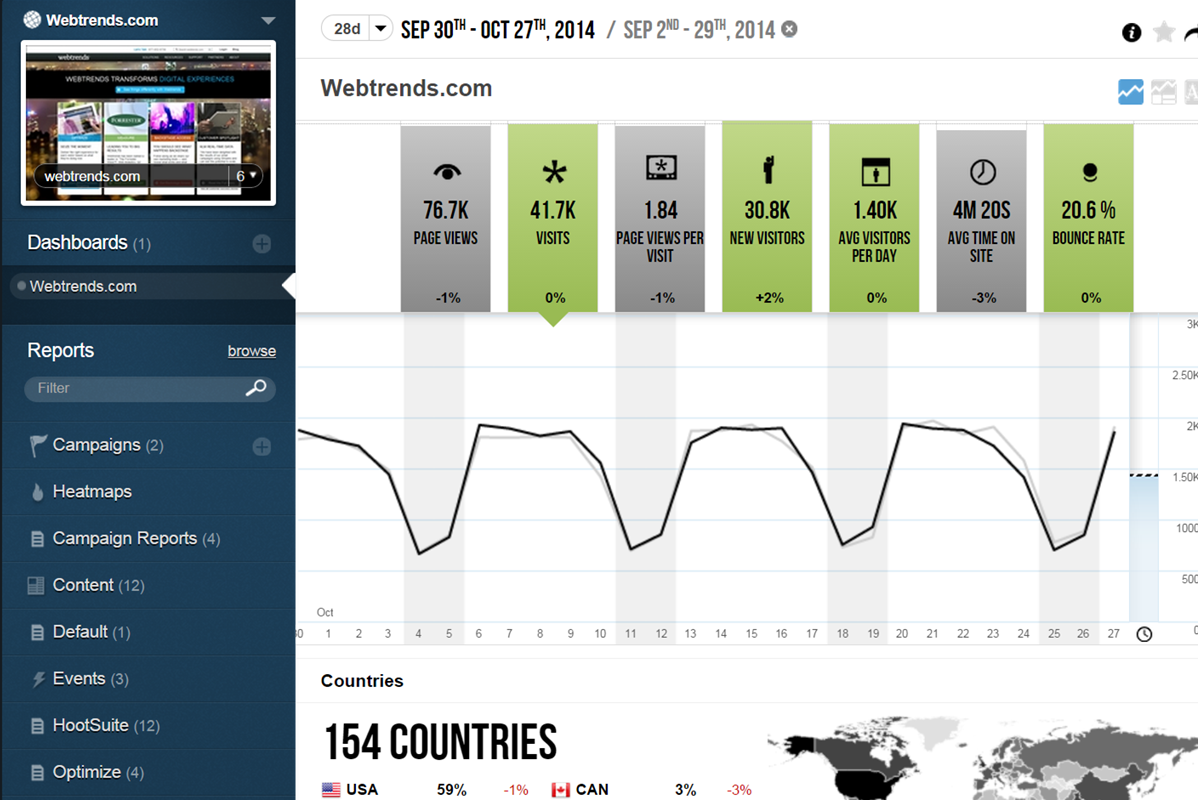
WebTrends provides an enterprise web analytics platform and, according to Forrester, has a strong focus on support for mobile and social channels and a very open platform. Webtrends competes directly with Adobe Site Catalyst, IBM Coremetrics. and comScore DigitalAnalytix.
N/A
Pricing
Apptopia
Webtrends Analytics
Editions & Modules
Start Plan
$79
month
Engage Plan
$899
month
Grow Plan
$1,499
month
No answers on this topic
Offerings
Pricing Offerings
Apptopia
Webtrends Analytics
Free Trial
Yes
No
Free/Freemium Version
Yes
No
Premium Consulting/Integration Services
No
No
Entry-level Setup Fee
No setup fee
No setup fee
Additional Details
Custom plans are available, including the option for a robust API integration. Email sales@apptopia.com or call 1-855-277-8674 to learn more.
At first the platform was great although after a while we noticed lots of inconsistencies when we compared with other platforms and confirmed when speaking with publishers. The coverage for iOS was also not great. Overall the coverage was not sufficient. The UI was beautiful looking although if it's not accurate it is pointless.
Scenarios 1. If you want to use web server log files as input to your web analytics, then Webtrends will provides a good product, with great ease of implementation. Don't even think about being cheap on hardware, and make sure Webtrends runs on real servers, not in a VM environment. 2. If you want to use Data Tagging, similar to Google Analytics or Site Catalyst, Webtrends has a powerful product, just be prepared to pay. 3. If you are new to Web Analytics, but it is the strategic direction, start with Webtrends on Premises. Questions to Ask 1. What are you trying to accomplish? 2. Can you place a dollar value on the benefit that you expect/need from Webtrends? 3.Can you live with Webtrends running SaaS?
Apptopia not only allows you to see what technologies are being used in an app, but also when an technology is removed, inactive or installed.
You can create alerts to help you stay on top of changes in the market, SDK, revenue, user base and more.
The benefits of working with an SMB company is you get their full attention at any point in the customer lifecycle. Early on to our usage of Apptopia we had the Chief Product Officer getting on calls and video shares with us to hear our feedback, ask for suggestions and to showcase new/upcoming features. They have excellent customer support and are constantly updating and adding to their already amazing product.
The employees that work there are very receptive and helpful as well. I was reviewing another tool for my company to use and noticed one of their managers had left a review about the given tool. I personally reached out to her asking for her opinion and feedback before buying and she responded within a day.
Webtrends Analytics makes complex situations understandable to a non-technical audience. The vast capabilities and ways to slice data is both a great tool, but can also cause a user/users many hours of frustration.
Visual data display is clean, to the point, and not overly convoluted with unneeded variables and standard (defualt) settings. Everything the end user sees is customizeable.
Exports of raw data collections was easy and accurate. Once the parameters of data collection are finally set up and working, its easy to get what you want from the UI and is delievered in a variety of options.
Webtrends is not great at providing statistical data for analysis. You need to enable Log File Delivery or create an analysis export to perform this. This could theoretically be done with Streams.
Webtrends has difficulty identifying multi-visit users due to the inherent fragility of cookie-based tracking.
Webtrends Analytics does not provide Pathing capabilities for segments, only for the aggregate. However, this can be worked around with Scenario functionality selectively fired by a tag management system.
Segmentation by high-cardinality parameters tends to cause issues with table limits. Even after scrubbing and scrutinizing data, we commonly see up of 10K rows per dimension. Due to this, we use Webtrends Analytics to roll up data into larger segments and export all of our log data into our database for heavy duty number crunching.
The obstacles to renewing are 1) finding people to manage it who know it well and 2) frustration because of the lack of on-the-fly analysis. Usually, renewal prices are reasonable and the cost of switching to something else when you have a somewhat complicated setup far outweigh the renewal costs, especially if your implementation is sound and your reports are humming along. A lot of renewal decisions are going to hinge on the new product that will start to roll out this month.
If I could give it a 0, I would. Not having an intuitive user interface made it impossible to convince non-analytic business users to use the tool on their own. Even as a seasoned analyst, frequent calls were needed to get what should be simple tasks done. Account managers don't understand the tool either, and have to refer you to technical support
The v9 admin interface and v10 reporting interface work as well as expected, but have a tendency to be pokey, especially for bulky reports and whenever you're connected to wifi. I much prefer using the REST API for all reporting for this reason, which simply dumps out the data and doesn't bother with the user interface.
The Webtrends Support Engineers are expert at what they do, and we get to speak to someone on the support team quickly. They provide great solutions when available, and when there is no solution, which can happen, they describe work-arounds.
The in-person training was comprehensive enough to get you started, but I strongly recommend having a more experienced person when beginning with the tool.
Webtrends provides several free webinars over the course of the year, many of which I would expect to pay for. The people providing the webinars seem to have a good feel for real-world application of the product.
Careful planning and patience. Use a non-public test site to fine tune tags and reporting. Despite best laid plans, there will be surprises when you collect the data, run the analysis and begin generating reports using the tool. Perform a tag audit to ensure tags fire as desired.
We initially went to Datanyze for email hunting and list building. As we learned more about the feature they offer we realized their data was not as accurate as we needed. During our evaluation of the product there were lots of promises of Beta features or things in the future and not a ton of focus or confidence in what they offered currently. We did leverage and benefit from Datanyze for a decent amount of time, but when we evaluated a side by side comparison, Apptopia came out on top. Datanyze is a little different where they can pull lists of contacts, but at the end of the day we saw App data more important than those lists
Webtrends has its work cut out for itself considering you have the behemoth Google Analytics and Google Analytics Premium having a strong offering and brand recognition for the price of free. After reviewing the paid service I'd suggest you start off with GA as a cheaper alternative that is just as robust, if not much more flexible in regards to the reporting and goal tracking needs for our company.
Webtrends has had a positive impact on site visitation because it allowed us to understand the sources by domain for site traffic and find out ways to increase visits from those domains.
Webtrends has also allowed us to understand areas of optimization on the site, which has had a positive impact on the overall user journey on the site, likely leading to longer site duration and engagement.