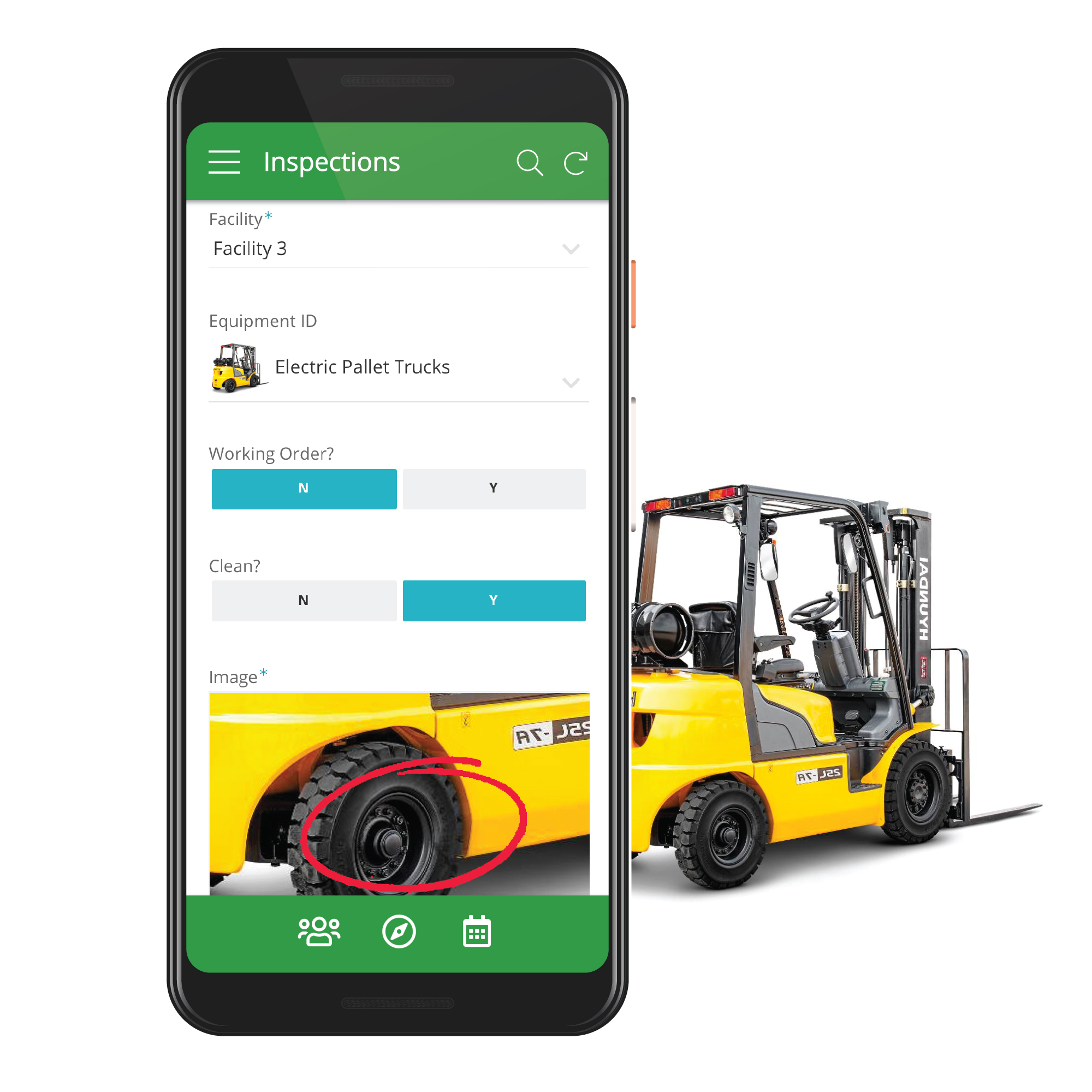
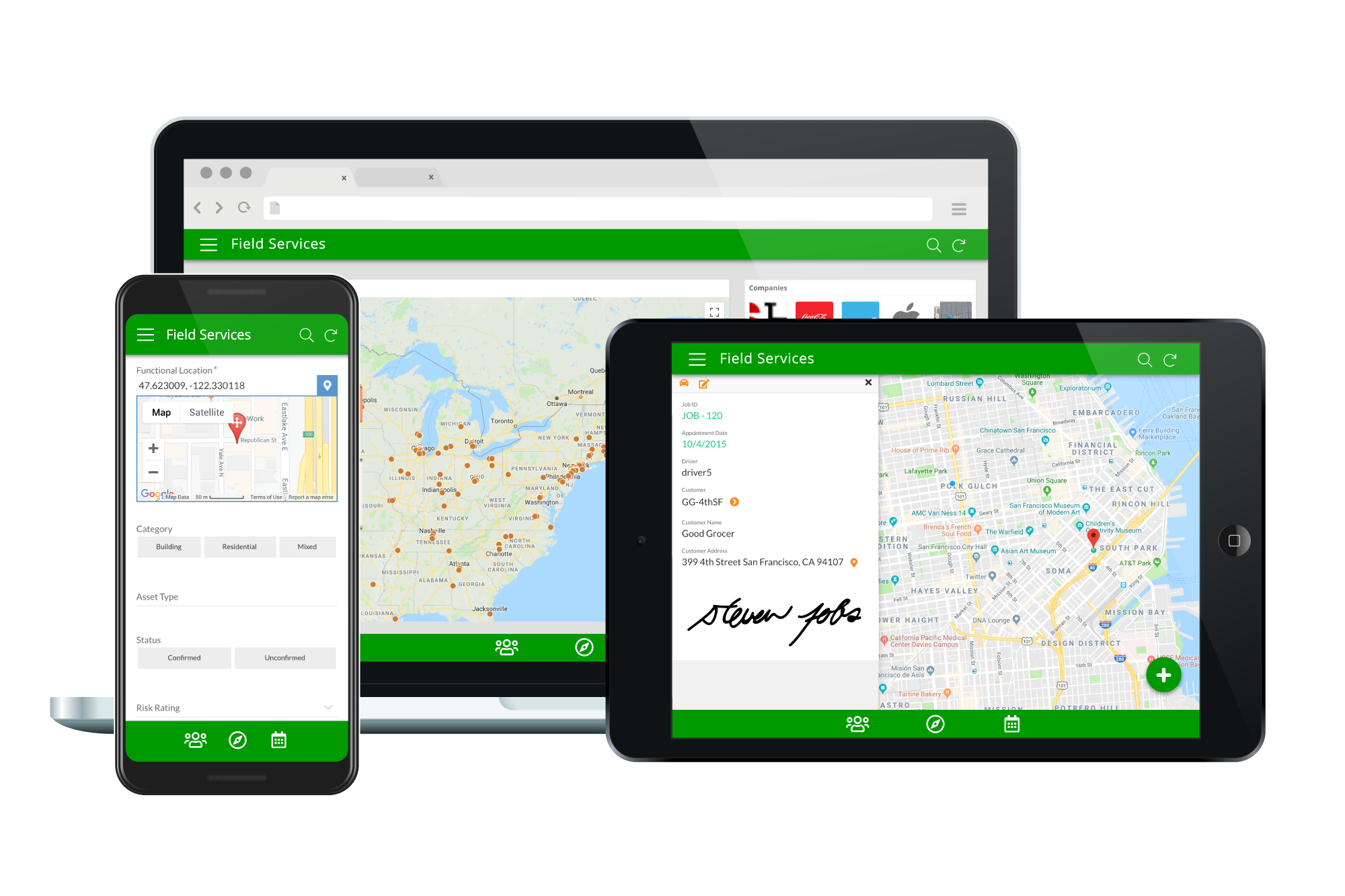
Acquired by Google in Spring 2020, AppSheet is an intelligent, no-code app platform for everyone. Users can create apps to transform the workplace. Common use cases include field service, transportation, customer surveys, incident reports, field data capture, compliance reports, delivery tracking, and property surveys. Used by the Fortune 500 & Industry Leaders Customers include Clearlink, Enterprise Holdings, ESPN, Pepsi, the University of Michigan, and the State of…
$5
per user/per month
Google App Maker (discontinued)
Score 7.3 out of 10
N/A
Google AppMaker was a low-code development environment. App Maker is included with G Suite Business and Enterprise editions, as well as with G Suite for Education. It was discontinued in early 2021.
N/A
Pricing
AppSheet
Google App Maker (discontinued)
Editions & Modules
Premium
$5.00
per user/per month
Pro
$10.00
per user/per month
Business
Contact sales team
Enterprise
Contact sales team
No answers on this topic
Offerings
Pricing Offerings
AppSheet
Google App Maker (discontinued)
Free Trial
Yes
No
Free/Freemium Version
Yes
No
Premium Consulting/Integration Services
No
No
Entry-level Setup Fee
No setup fee
No setup fee
Additional Details
Personal apps and prototype are always free to build. Don't pay until you're ready to deploy.
What can I do for free?
Use the complete set of AppSheet features for free while building one or many app prototypes (for as long as you like). Invite up to 10 users for free to use your apps & share feedback.
How do Business Subscription pricing work?
Business Subscriptions enable a suite of performance & management features for organizations with cross-departmental app creators, and pricing is based on each unique requirements. Connect with the AppSheet team at solutions.appsheet.com/contact to learn more.
—
More Pricing Information
Community Pulse
AppSheet
Google App Maker (discontinued)
Features
AppSheet
Google App Maker (discontinued)
Low-Code Development
Comparison of Low-Code Development features of Product A and Product B
Suitable for database work. Access controller for personnel, products, sales, distribution, etc. Not suitable for applications that require visual and graphic demands. There are graphically interactive applications that have buttons or action gestures that are not common. It should be possible, to create the App. Remove information relevant to the specific company or business for which the App was generated. And then be able to share it with other similar businesses independently.
App Maker is exceptionally strong when you need things to just get done, but your internal development team has a full queue. Or maybe you don't even have an internal development team! If you need a check-in system, an applicant tracking system, an office cleaning checklist with notifications and reports, etc. you can use App Maker to throw something together and make sure your team can use it. You can also collaborate on it, so teams can make this part of their process improvement goals.
Calculations - I have several apps that do some pretty complicated calculations, and decision making to build things like Shopping Lists for a Kanban assembly team, where the app will help a stocker determine whats low in a kanban assembly line stock box.
Document generation and record keeping - I have an app that users digitally sign and receive PDF contracts, and the system automatically records all records from the transaction. Everything is held in files on YOUR OWN DRIVE (Google Drive) so when you're done with the project or AppSheet you DONT loose your data.
Client/Customer Management - I follow the old school "Swimming with Sharks" model for client retention and customer engagement, and have built several small customer tracking tools for local businesses. This tool is limited ONLY by your imagine and desire to learn.
Minimal coding experience required. Javascript is a must-have, but the documentation is excellent, and once you're past the learning curve, it's great!
Great WYSIWYG editor. It's easy to see the layout and still have deep control over what you're putting together.
Excellent integrations with G Suite. There are methods built-in that allow you to easily authenticate and work with the G Suite APIs.
GPS on the maps are terrible. We dont use the map to collect data as the signal is erratic only in Appsheet. We have another app installed on the same phone to get X,Y data which is copied and pasted into the appsheet solution. We have tried everything but Appsheet map and coordinate accuracy and erratic behaviour is below par.
Deployment management. While it is great that people see your changes right away, it sometimes leads to downtime if one makes a mistake. In the beginning it was hard to tell which changes would negatively effect the users and in some cases the data got jumbled due to table changes. Would be good if development, testing and deployment were better streamlined. No need for auto testing (like selenium etc.) just a place we can test before deploying. Now we have several "dev" versions with a cumbersome copy and paste system.
Definitely not for beginners. App Maker certainly isn't usable by "everybody," but it's excellent for those who are willing to learn and get their hands dirty!
Experienced developers will have issues. The target user is someone who doesn't want to (or know how to) use something like App Engine or Kubernetes. People with more experience will certainly see limitations and find it difficult to use to the fullest extent.
Data sources can be iffy to manage. It used to be that App Maker would use a sheet or "Drive table" as a data source, but it now requires a GCP data source like CloudSQL.
It's just great. The usability is the best thing about Appsheet. You must choose which things will really be used later. You have to be careful of not generating something too big and then it feels like something that need to be learned. This is something that resolve problems, but you had to be able to think before doing. It will not solve problems itself. You need to find the problem, think a solution, and then use appsheet to make this solution a reality
AppSsheet has a support group and they show videos to help app builders. Though I have truck drivers' hours and can't join the webinars. Support groups with better assists me on a Saturday evening or a Sunday that I have time off. It's hard to watch videos driving down the highway.
App Maker is a very "do it yourself" platform. There is a huge amount of documentation and plenty of examples to begin learning, plus a vast community support through StackOverflow that can assist anywhere that you're stuck, but the great thing is that it's all up to you. If there are specific features that don't work, Google is always there to help troubleshoot.
We started to try Glide, but we had already started our learning curve with Appsheet, and as the cost is part of our plan, the choice was easy. Since there is no cost for each feature we want to develop, Appsheet can serve as a replacement for tools like Docs, Sheets, and Slides. It just turns into another piece of software the employees are using, so thinking of moving to another product is nonsense.
App Maker is really kind of new in its own space. We haven't seen the level of functionality, nor the deep integrations, with anything else. It can replace a lot of products, and we've seen it in place in many applications across our organization, so it's been able to reduce our spend on products that offer specific functionality and still need to be customized.
A good impact in general at the beginning since the free version allows great development so the investment in the implementation is of knowledge and time.
As a consultant I have expanded my services through this platform including new low code application building services.
We have seen a reduction in time spent on manual processes by being able to automate functions in Google Sheets, take input with special functionality, and have App Maker do the work for us.
We have seen the internal development queue decrease, which allows us to focus on larger projects that couldn't be handled by App Maker.
We have seen ownership and process improvements increase in certain departments, as they are able to get to work themselves.