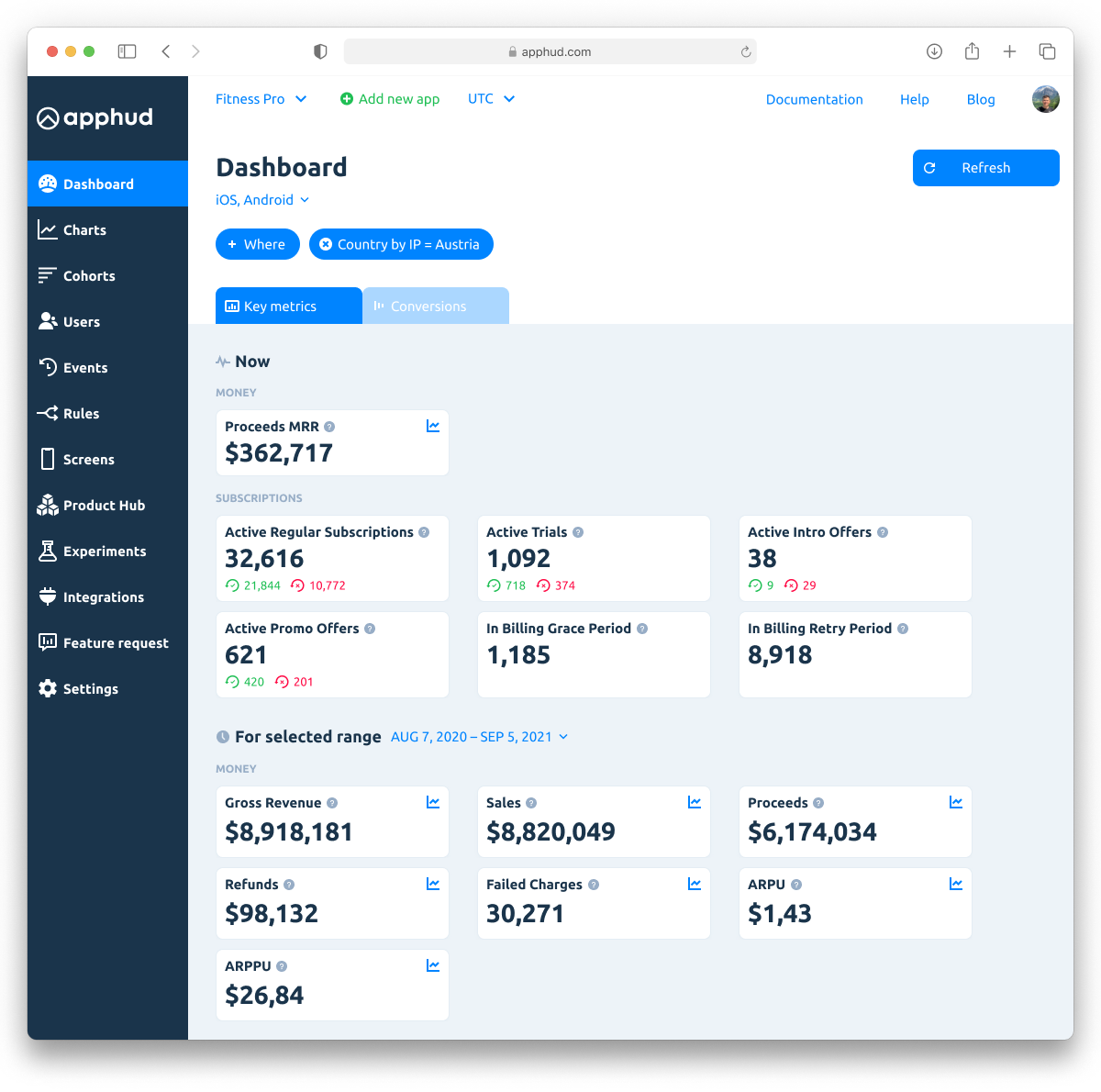
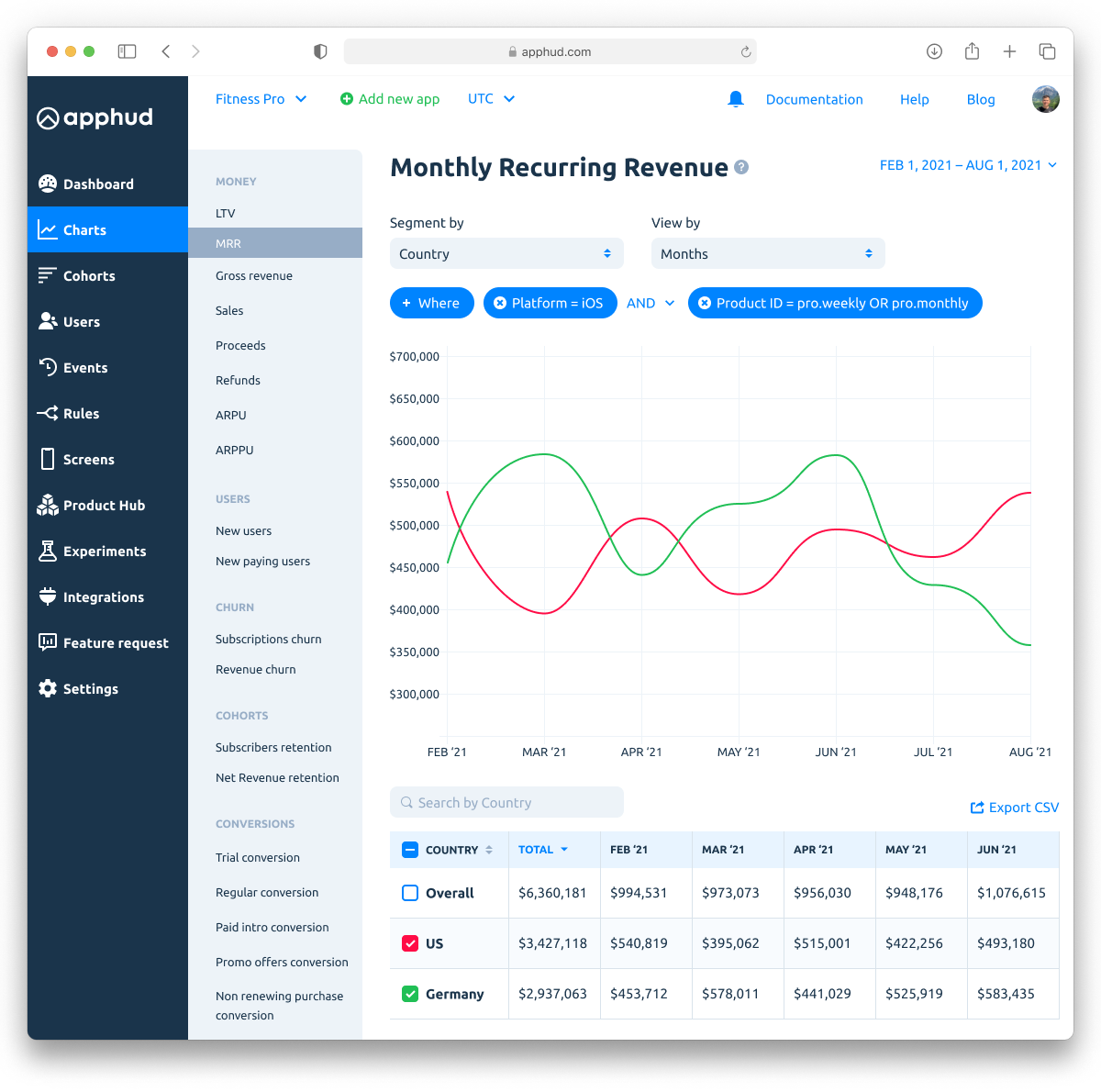
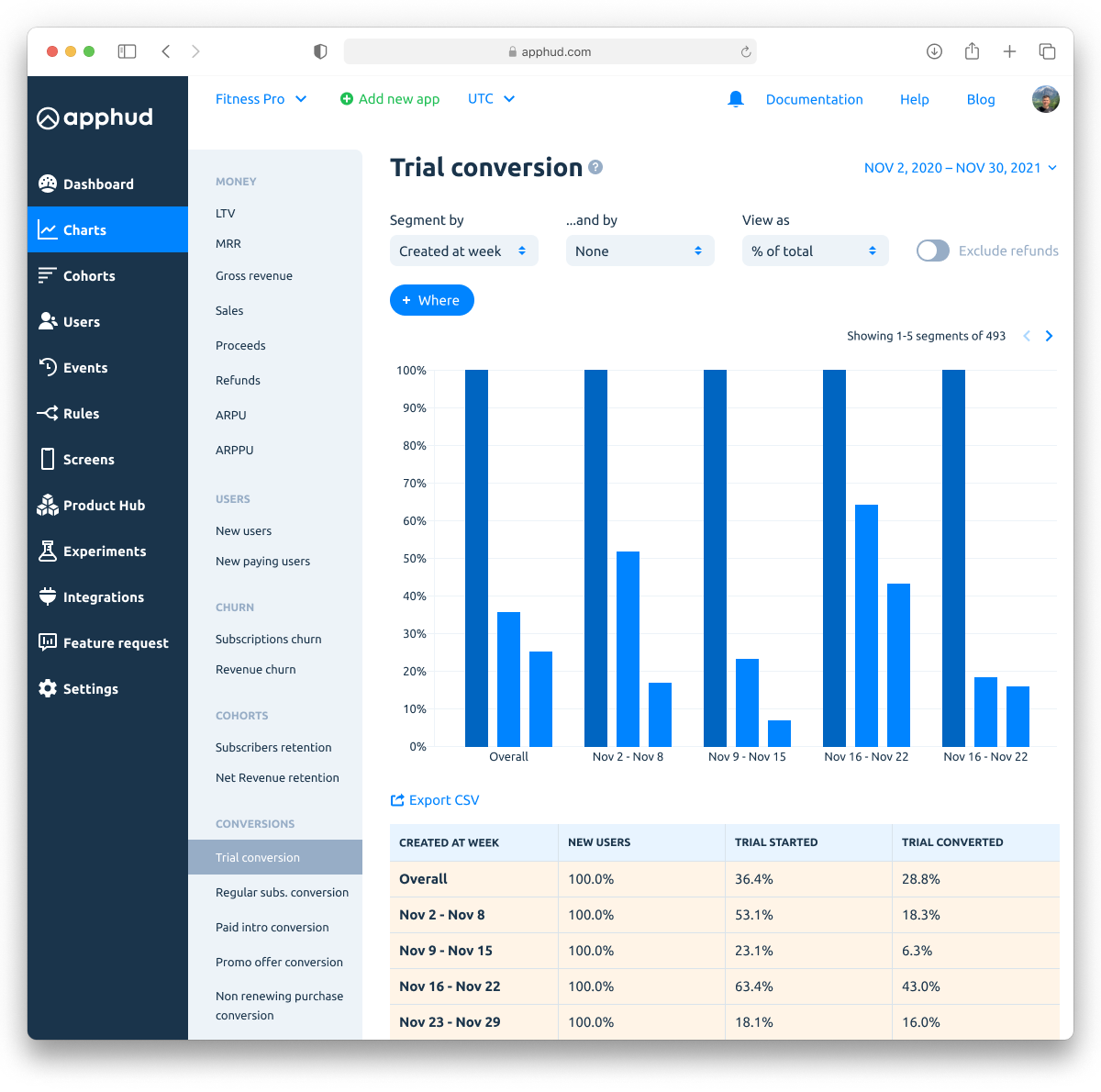
Apphud is a technological stack to grow iOS and Android apps with in-app purchases. Designed for app developers, mobile marketers and product managers.
It provides a payment infrastructure for cross-platform apps. Set up in-app purchases without writing a single line of a server code: by signing up at Apphud users can integrate its Open source SDK.
Apphud integrates with 16 leading tools, including…
N/A
Zuora
Score8.1 out of 10
N/A
Zuora is one of the best-known subscription billing platforms. Zuora is an enterprise-level product and, as such, provides comprehensive metrics, tax automation, and support for multiple currencies. It also offers Salesforce and NetSuite integration out-of the-box. It often replaces cumbersome ERP (enterprise resource planning) systems that does not focus exclusively on billing.
N/A
Pricing
Apphud
Zuora
Editions & Modules
No answers on this topic
No answers on this topic
Offerings
Pricing Offerings
Apphud
Zuora
Free Trial
Yes
No
Free/Freemium Version
Yes
No
Premium Consulting/Integration Services
No
No
Entry-level Setup Fee
No setup fee
No setup fee
Additional Details
Use Apphud for FREE if a total monthly tracked revenue (MTR) across all your apps in Apphud account is less than $10,000. Paid plans starting from $199 per month. Bulk discounts apply If your app earns more than $100,000 per month. Please, contact us for details.
You might find Apphud as one of the best solutions if you want quick implementation. Apphud is well documented and anyone with a little technical background in app development could integrate it with your existing app or solution. If you want a lightweight, sleek, and best design flow, you should see some demos first, as you might wanna try something better.
A de minimis incentive was given to thank the reviewer for their time. The incentive was not used to bias or drive a particular response, nor was the incentive contingent on a positive endorsement. More Info
Zuroa is very well-suited for B2B businesses that primarily have a subscription stream of revenue. It is less appropriate for B2C and retail, if you are only selling one-time products or services, this tool would be overkill and confusing instead of helpful. However, if you need to recognize revenue from subscriptions over the service period, Zuora is a lifesaver.
A de minimis incentive was given to thank the reviewer for their time. The incentive was not used to bias or drive a particular response, nor was the incentive contingent on a positive endorsement. More Info
A de minimis incentive was given to thank the reviewer for their time. The incentive was not used to bias or drive a particular response, nor was the incentive contingent on a positive endorsement. More Info
The implementation of Zuora is very helpful. Their interactive training guides are one of the best I've used. It is very thorough and any salesperson can learn how to use it very quickly.
Their subscription management offers many ways to sell a subscription. These subscriptions can be evergreen (renewing every month) or termed subscriptions. The subscriptions can be amended to add/remove products very easily.
The ability to quickly pass through large amounts of usage data for our clients is allowing us to perform billing in a time-effective manner. Once usage data is loaded, a few clicks and all of the invoices for our client base can be generated. Invoices are clean and detailed which help us maintain a good customer experience even with our somewhat complex billing model. The reporting is extremely helpful in calculating the end of month commissions, recognizing and deferring revenue, and overall bookkeeping.
A de minimis incentive was given to thank the reviewer for their time. The incentive was not used to bias or drive a particular response, nor was the incentive contingent on a positive endorsement. More Info
A de minimis incentive was given to thank the reviewer for their time. The incentive was not used to bias or drive a particular response, nor was the incentive contingent on a positive endorsement. More Info
User Interface - Zuora's UI is still a weak point, however, this is negated through the use of its API's. Zuora has done a lot of work in releasing new products to limit its UI experience and the addition of Orders allows for more functionality to reduce the UI issue.
Complex system - This is both a pro and a con, but in this instance, it is a con because we may not have taken the time to truly understand the implications of all the options that were available. the Flexibility is great however if you do not take the time to understand the product and what problem you are trying to solve, you can make life difficult for yourself later down the track. Take the time to map out your approach end to end and ensure your assumptions at the start are robust.
Reporting - reporting is weak as such we have moved away to our own reporting data warehouse.
Our business is now, more than ever, focused on our core business rather than homegrown support tools for quoting, contracts, billing, invoicing, payments and the rest of the subscription economy. We evaluated other solutions and found this the best and most viable solution given the strong ties to Salesforce and it's integration. Zuora works, and it works well.
I had 20+ years of accounting experience before taking on the revenue role. I had several things to [learn] but was able to easily master the software in a matter of weeks. Zuora is our preferred billing platform that we currently use - very efficient and much more automated than our other platform/process.
A de minimis incentive was given to thank the reviewer for their time. The incentive was not used to bias or drive a particular response, nor was the incentive contingent on a positive endorsement. TR verified that a representative sample of customers was invited. More Info
There have only been a few days/instances in the past 2.5 years of using zuora that I, personally have had issues or been notified of issues relating to Zuora.
A de minimis incentive was given to thank the reviewer for their time. The incentive was not used to bias or drive a particular response, nor was the incentive contingent on a positive endorsement. TR verified that a representative sample of customers was invited. More Info
Zuora does a superb job for all the tasks I use it for. Billing - it is trustworthy and accurate. Customer data- it holds it and keeps past records for even cancelled accounts, and subscription builds - it has the ability to make very difficult subscriptions seem easy.
A de minimis incentive was given to thank the reviewer for their time. The incentive was not used to bias or drive a particular response, nor was the incentive contingent on a positive endorsement. TR verified that a representative sample of customers was invited. More Info
A support request is emailed to their support team, then an automated response is sent to you in a couple hours saying "Hey, someone will take a look at your support request soon". Then somewhere around 12-18 hours later, an actual support member responds with "Have you checked out our tutorials? Here's one that sounds like it might help you". I don't want a tutorial given to me that I've already read through that only exists because of the terrible user design of Zuora's user interface
A de minimis incentive was given to thank the reviewer for their time. The incentive was not used to bias or drive a particular response, nor was the incentive contingent on a positive endorsement. TR verified that a representative sample of customers was invited. More Info
A de minimis incentive was given to thank the reviewer for their time. The incentive was not used to bias or drive a particular response, nor was the incentive contingent on a positive endorsement. TR verified that a representative sample of customers was invited. More Info
A de minimis incentive was given to thank the reviewer for their time. The incentive was not used to bias or drive a particular response, nor was the incentive contingent on a positive endorsement. TR verified that a representative sample of customers was invited. More Info
I think Zuora did a great job. However, they could have provided more guidance on how to deal with out Payment Gateway and Processor provider, as well as guidance around providing a Mobile Responsive experience for sites using the Zuora HPM.
A de minimis incentive was given to thank the reviewer for their time. The incentive was not used to bias or drive a particular response, nor was the incentive contingent on a positive endorsement. TR verified that a representative sample of customers was invited. More Info
In its focused area of subscription management, Zuora does well against competitors. There are some aspects of the tool that appear to attempt to be more "platform" oriented, but fall off quickly. NetSuite and SFDC are not reporting tools, but they look great when compared to Zuora in this regard. Zuora has scripting capabilities thru REST and SOAP (deprecated), but I have found it to be confusing and not particularly useful; much of the documentation and KB seems out-of-date or just plain wrong.
A de minimis incentive was given to thank the reviewer for their time. The incentive was not used to bias or drive a particular response, nor was the incentive contingent on a positive endorsement. TR verified that a representative sample of customers was invited. More Info
A de minimis incentive was given to thank the reviewer for their time. The incentive was not used to bias or drive a particular response, nor was the incentive contingent on a positive endorsement. TR verified that a representative sample of customers was invited. More Info
A de minimis incentive was given to thank the reviewer for their time. The incentive was not used to bias or drive a particular response, nor was the incentive contingent on a positive endorsement. More Info