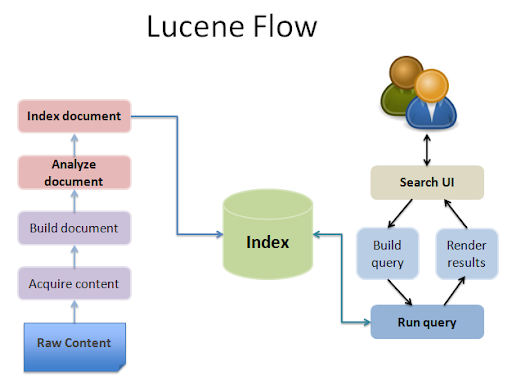
Apache Lucene is an open source and free text search engine library written in Java. It is a technology suitable for applications that requires full-text search, and is available cross-platform.
N/A
Google BigQuery
Score 8.4 out of 10
N/A
Google's BigQuery is part of the Google Cloud Platform, a database-as-a-service (DBaaS) supporting the querying and rapid analysis of enterprise data.
$0.04
Pricing
Apache Lucene
Google BigQuery
Editions & Modules
No answers on this topic
Standard edition
$0.04 / slot hour
Enterprise edition
$0.06 / slot hour
Enterprise Plus edition
$0.10 / slot hour
Offerings
Pricing Offerings
Apache Lucene
Google BigQuery
Free Trial
No
Yes
Free/Freemium Version
Yes
Yes
Premium Consulting/Integration Services
No
No
Entry-level Setup Fee
No setup fee
No setup fee
Additional Details
A free and open source product.
—
More Pricing Information
Community Pulse
Apache Lucene
Google BigQuery
Features
Apache Lucene
Google BigQuery
Database-as-a-Service
Comparison of Database-as-a-Service features of Product A and Product B
Apache Lucene offers great full-text search library that makes it easy to add search functionality to a website or other applications. Lucene is ideal if you want low-level access to the indexes and its APIs. For general purposes, Apache Solr, the web application built atop of Lucene can be used instead. Apache Solr comes with caching, HTTP/ JSON APIs and a simple web administration console.
Google BigQuery is great for being the central datastore and entry point of data if you're on GCP. It seamlessly integrates with other Google products, meaning you can ingest data from other Google products with ease and little technical knowledge, and all of it is near real-time. Being serverless, BigQuery will scale with you, which means you don't have to worry about contention or spikes in demand/storage. This can, however, mean your costs can run away quickly or mount up at short notice.
Its serverless architecture and underlying Dremel technology are incredibly fast even on complex datasets. I can get answers to my questions almost instantly, without waiting hours for traditional data warehouses to churn through the data.
Previously, our data was scattered across various databases and spreadsheets and getting a holistic view was pretty difficult. Google BigQuery acts as a central repository and consolidates everything in one place to join data sets and find hidden patterns.
Running reports on our old systems used to take forever. Google BigQuery's crazy fast query speed lets us get insights from massive datasets in seconds.
We had difficulty porting the project to a cluster based environment on the cloud.
For our particular use case of retrieving documents based on text pattern matching, the program worked efficiently however, we did not find many resources for image pattern recognition based on their metadata.
It is challenging to predict costs due to BigQuery's pay-per-query pricing model. User-friendly cost estimation tools, along with improved budget alerting features, could help users better manage and predict expenses.
The BigQuery interface is less intuitive. A more user-friendly interface, enhanced documentation, and built-in tutorial systems could make BigQuery more accessible to a broader audience.
We have to use this product as its a 3rd party supplier choice to utilise this product for their data side backend so will not be likely we will move away from this product in the future unless the 3rd party supplier decides to change data vendors.
web UI is easy and convenient. Many RDBMS clients such as aqua data studio, Dbeaver data grid, and others connect. Range of well-documented APIs available. The range of features keeps expanding, increasing similar features to traditional RDBMS such as Oracle and DB2
I have never had any significant issues with Google Big Query. It always seems to be up and running properly when I need it. I cannot recall any times where I received any kind of application errors or unplanned outages. If there were any they were resolved quickly by my IT team so I didn't notice them.
I think Google Big Query's performance is in the acceptable range. Sometimes larger datasets are somewhat sluggish to load but for most of our applications it performs at a reasonable speed. We do have some reports that include a lot of complex calculations and others that run on granular store level data that so sometimes take a bit longer to load which can be frustrating.
BigQuery can be difficult to support because it is so solid as a product. Many of the issues you will see are related to your own data sets, however you may see issues importing data and managing jobs. If this occurs, it can be a challenge to get to speak to the correct person who can help you.
The search and index performance of [Apache] Lucene is excellent and the quality of results is good, if not better. For implementing it with small scale applications it is a no brainer, Lucene is the best and most cost effective solution. Learning curve is not too steep either.
Google BigQuery of course collects a much much larger array of raw data and can handle (practically) an unlimited amount of data. For a large enterprise like ours that relies on large-scale analytics, this is absolutely imperative. Google BigQuery can also combine GA4 data with external sources (like CRM tools), so our analytics can be unified. Due to our heavy reliance on GA4, Google BigQuery is the natural choice since it is a Google product and has better integration.
We have continued to expand out use of Google Big Query over the years. I'd say its flexibility and scalability is actually quite good. It also integrates well with other tools like Tableau and Power BI. It has served the needs of multiple data sources across multiple departments within my company.
In some places, Google BigQuery has helped us save some money by avoiding the need for expensive infrastructure and reducing some of the operational costs.
Scalability is up-to-date and really helpful in multiple places.
Knowledge transfer is easy as it is very user-friendly, so the learning curve has been reduced.
Also, it gives us more insights from our data, helping us make smarter decisions for our business.