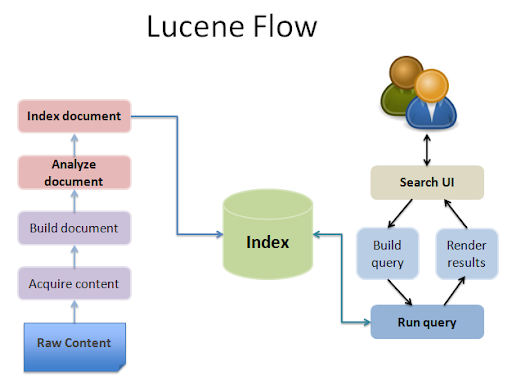
Apache Lucene is an open source and free text search engine library written in Java. It is a technology suitable for applications that requires full-text search, and is available cross-platform.
N/A
Apache Spark
Score 9.2 out of 10
N/A
Apache Spark is a multi-language engine for executing data engineering, data science, and machine learning on single-node machines or clusters.
Apache Lucene offers great full-text search library that makes it easy to add search functionality to a website or other applications. Lucene is ideal if you want low-level access to the indexes and its APIs. For general purposes, Apache Solr, the web application built atop of Lucene can be used instead. Apache Solr comes with caching, HTTP/ JSON APIs and a simple web administration console.
Apache Spark has rich APIs for regular data transformations or for ML workloads or for graph workloads, whereas other systems may not such a wide range of support. Choose it when you need to perform data transformations for big data as offline jobs, whereas use MongoDB-like distributed database systems for more realtime queries.
It performs a conventional disk-based process when the data sets are too large to fit into memory, which is very useful because, regardless of the size of the data, it is always possible to store them.
It has great speed and ability to join multiple types of databases and run different types of analysis applications. This functionality is super useful as it reduces work times
Apache Spark uses the data storage model of Hadoop and can be integrated with other big data frameworks such as HBase, MongoDB, and Cassandra. This is very useful because it is compatible with multiple frameworks that the company has, and thus allows us to unify all the processes.
We had difficulty porting the project to a cluster based environment on the cloud.
For our particular use case of retrieving documents based on text pattern matching, the program worked efficiently however, we did not find many resources for image pattern recognition based on their metadata.
If the team looking to use Apache Spark is not used to debug and tweak settings for jobs to ensure maximum optimizations, it can be frustrating. However, the documentation and the support of the community on the internet can help resolve most issues. Moreover, it is highly configurable and it integrates with different tools (eg: it can be used by dbt core), which increase the scenarios where it can be used
1. It integrates very well with scala or python. 2. It's very easy to understand SQL interoperability. 3. Apache is way faster than the other competitive technologies. 4. The support from the Apache community is very huge for Spark. 5. Execution times are faster as compared to others. 6. There are a large number of forums available for Apache Spark. 7. The code availability for Apache Spark is simpler and easy to gain access to. 8. Many organizations use Apache Spark, so many solutions are available for existing applications.
The search and index performance of [Apache] Lucene is excellent and the quality of results is good, if not better. For implementing it with small scale applications it is a no brainer, Lucene is the best and most cost effective solution. Learning curve is not too steep either.
We used Surprise Kit for one of the other research works. It is more fine-tuned to Recommendation systems and their algorithms. Apache Spark has MLlib for majority of ML problems. Where as software like Surprse Kit - it suitable for a specific task of Recommendations only
Faster turn around on feature development, we have seen a noticeable improvement in our agile development since using Spark.
Easy adoption, having multiple departments use the same underlying technology even if the use cases are very different allows for more commonality amongst applications which definitely makes the operations team happy.
Performance, we have been able to make some applications run over 20x faster since switching to Spark. This has saved us time, headaches, and operating costs.