Apache Camel is an open source integration platform.
N/A
Anypoint Platform
Score7.8 out of 10
N/A
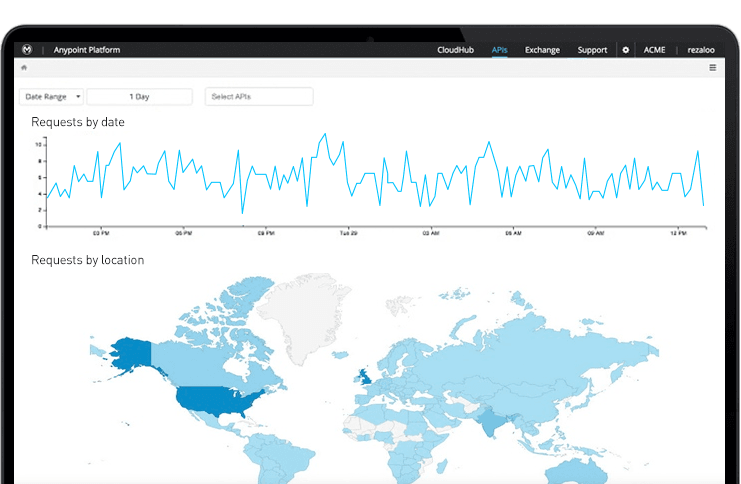
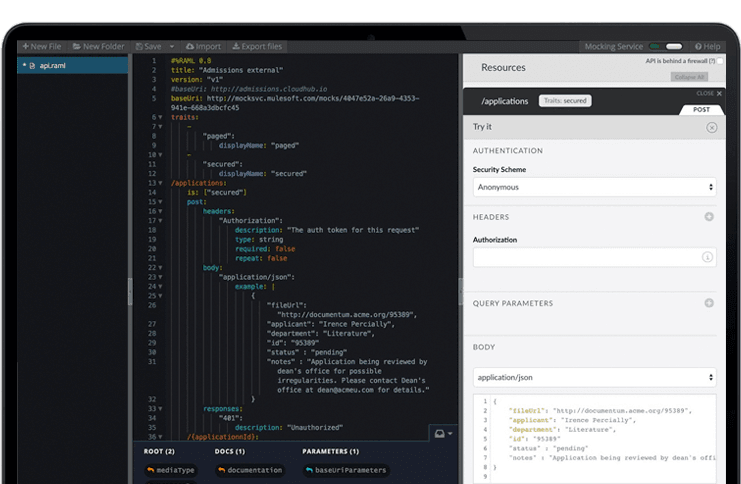
The Anypoint Platform developed by MuleSoft and acquired by Salesforce in early 2018 is designed to
connect apps, data, and devices anywhere, on-premises or in the cloud. This platform was built to
offer out-of-the-box connectors as well as tools that architects and developers can adopt quickly to
design, build and manage the entire lifecycle of their APIs, applications, and products.
N/A
Pricing
Apache Camel
Anypoint Platform
Editions & Modules
No answers on this topic
No answers on this topic
Offerings
Pricing Offerings
Apache Camel
Anypoint Platform
Free Trial
No
Yes
Free/Freemium Version
No
Yes
Premium Consulting/Integration Services
No
No
Entry-level Setup Fee
No setup fee
No setup fee
Additional Details
—
—
More Pricing Information
Community Pulse
Apache Camel
Anypoint Platform
Considered Both Products
Apache
Verified User
Chose Apache Camel
WebSphere Message Broker - Expensive, old, hard to use, bad connectors Mulesoft - Very similar to Camel, but expensive and buggy
A de minimis incentive was given to thank the reviewer for their time. The incentive was not used to bias or drive a particular response, nor was the incentive contingent on a positive endorsement. More Info
Message brokering across different systems, with transactionality and the ability to have fine tuned control over what happens using Java (or other languages), instead of a heavy, proprietary languages. One situation that it doesn't fit very well (as far as I have experienced) is when your workflow requires significant data mapping. While possible when using Java tooling, some other visual data mapping tools in other integration frameworks are easier to work with.
A de minimis incentive was given to thank the reviewer for their time. The incentive was not used to bias or drive a particular response, nor was the incentive contingent on a positive endorsement. More Info
MuleSoft Anypoint Platform is best tool in the market for developing APIs with complex structures communicating with various different types of applications including web applications as well as legacy applications. Also applications including database connectivity for fetching and updating data in the DB tables. I cant think of any scenario which MuleSoft Anypoint Platform could not be used for developing the integrations.
A de minimis incentive was given to thank the reviewer for their time. The incentive was not used to bias or drive a particular response, nor was the incentive contingent on a positive endorsement. More Info
Camel has an easy learning curve. It is fairly well documented and there are about 5-6 books on Camel.
There is a large user group and blogs devoted to all things Camel and the developers of Camel provide quick answers and have also been very quick to patch Camel, when bugs are reported.
Camel integrates well with well known frameworks like Spring, and other middleware products like Apache Karaf and Servicemix.
There are over 150 components for the Camel framework that help integrate with diverse software platforms.
A de minimis incentive was given to thank the reviewer for their time. The incentive was not used to bias or drive a particular response, nor was the incentive contingent on a positive endorsement. More Info
A de minimis incentive was given to thank the reviewer for their time. The incentive was not used to bias or drive a particular response, nor was the incentive contingent on a positive endorsement. More Info
A de minimis incentive was given to thank the reviewer for their time. The incentive was not used to bias or drive a particular response, nor was the incentive contingent on a positive endorsement. More Info
Has more features than what we really need so we're paying for more than we use. Sort of like paying for an Abrams tank when all we really need is a Toyota Corolla.
Not a value product, tends to be expensive.
Takes a while for developers to learn to use Mulesoft Anypoint.
A de minimis incentive was given to thank the reviewer for their time. The incentive was not used to bias or drive a particular response, nor was the incentive contingent on a positive endorsement. More Info
MuleSoft Anypoint Platform is really very easy to adopt for application integration. Simple UI and easy data weave language allows user to focus on business portion only. The API management and deployment of application are hassle free.
A de minimis incentive was given to thank the reviewer for their time. The incentive was not used to bias or drive a particular response, nor was the incentive contingent on a positive endorsement. More Info
Anypoint Platform support is very responsive. There is also a huge knowledge base and an active online forum where answers to most questions can be found. When needed support engages the engineering group so adequate solutions or workarounds are always provided.
A de minimis incentive was given to thank the reviewer for their time. The incentive was not used to bias or drive a particular response, nor was the incentive contingent on a positive endorsement. More Info
If you are looking for a Java-based open source low cost equivalent to webMethods or Azure Logic Apps, Apache Camel is an excellent choice as it is mature and widely deployed, and included in many vendored Java application servers too such as Redhat JBoss EAP. Apache Camel is lacking on the GUI tooling side compared to commercial products such as webMethods or Azure Logic Apps.
A de minimis incentive was given to thank the reviewer for their time. The incentive was not used to bias or drive a particular response, nor was the incentive contingent on a positive endorsement. More Info
Once we have moved all of our system integration APIs to the MuleSoft Anypoint Platform, we will need to communicate with a wide variety of external systems. All of our business and service logic is stored in the aforementioned core systems. Anypoint Platform (and all of our APIs) makes it easy to connect to various other platforms. In order to link to these many other systems, connectors and/or components are utilized, and they are simple to configure and integrate.
A de minimis incentive was given to thank the reviewer for their time. The incentive was not used to bias or drive a particular response, nor was the incentive contingent on a positive endorsement. More Info
Very fast time to market in that so many components are available to use immediately.
Error handling mechanisms and patterns of practice are robust and easy to use which in turn has made our application more robust from the start, so fewer bugs.
However, testing and debugging routes is more challenging than working is standard Java so that takes more time (less time than writing the components from scratch).
Most people don't know Camel coming in and many junior developers find it overwhelming and are not enthusiastic to learn it. So finding people that want to develop/maintain it is a challenge.
A de minimis incentive was given to thank the reviewer for their time. The incentive was not used to bias or drive a particular response, nor was the incentive contingent on a positive endorsement. More Info
A de minimis incentive was given to thank the reviewer for their time. The incentive was not used to bias or drive a particular response, nor was the incentive contingent on a positive endorsement. More Info