Frontline Systems Analytic Solver is an Excel add-on for performing data mining, and predictive analytics from within Microsoft Excel.
N/A
DataRobot
Score 8.2 out of 10
N/A
The DataRobot AI Platform is presented as a solution that accelerates and democratizes data science by automating the end-to-end journey from data to value and allows users to deploy AI applications at scale. DataRobot provides a centrally governed platform that gives users AI to drive business outcomes, that is available on the user's cloud platform-of-choice, on-premise, or as a fully-managed service. The solutions include tools providing data preparation enabling users to explore and…
1. It is good tool for a mathematical model which is a single period and deterministic model 2. It is good for the users who are comfortable in handling the Excel Solver and needs to upgrade the Excel Solver for more than 200 variables 3. It works well for the multiple objective problems. 4. Difficult to manage the big model as 100 constraints and 2000 variables can limit the use of the tool's efficiency. 5. Its limitation is that a model designer can not make a big and complex model.
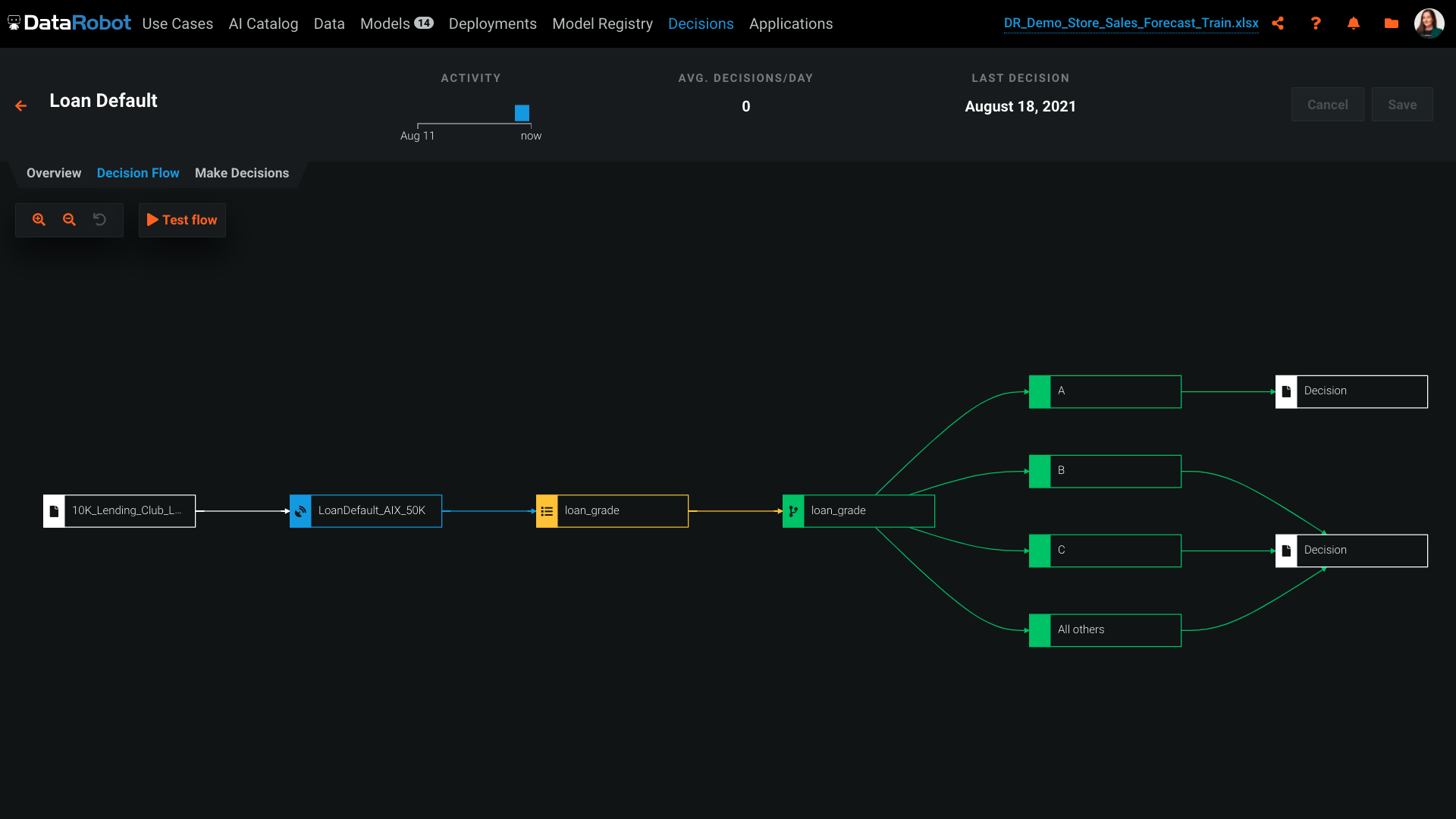
DataRobot can be used for risk assessment, such as predicting the likelihood of loan default. It can handle both classification and regression tasks effectively. It relies on historical data for model training. If you have limited historical data or the data quality is poor, it may not be the best choice as it requires a sufficient amount of high-quality data for accurate model building.
On the few occasions when I have used it to deal with problems of optimization of relatively large parameters (with a large number of restrictions and decision variables), the program has been slower, not substantially but slower, than programs such as the WinQsb, even when the latter runs on 32-bit machines and not 64. That has caught my attention, even though it is not a real problem for the uses I give to the program.
Given my partial function as a university professor, it has been much more effective and practical to use other software, due to the limited options that the educational license associated with the software has.
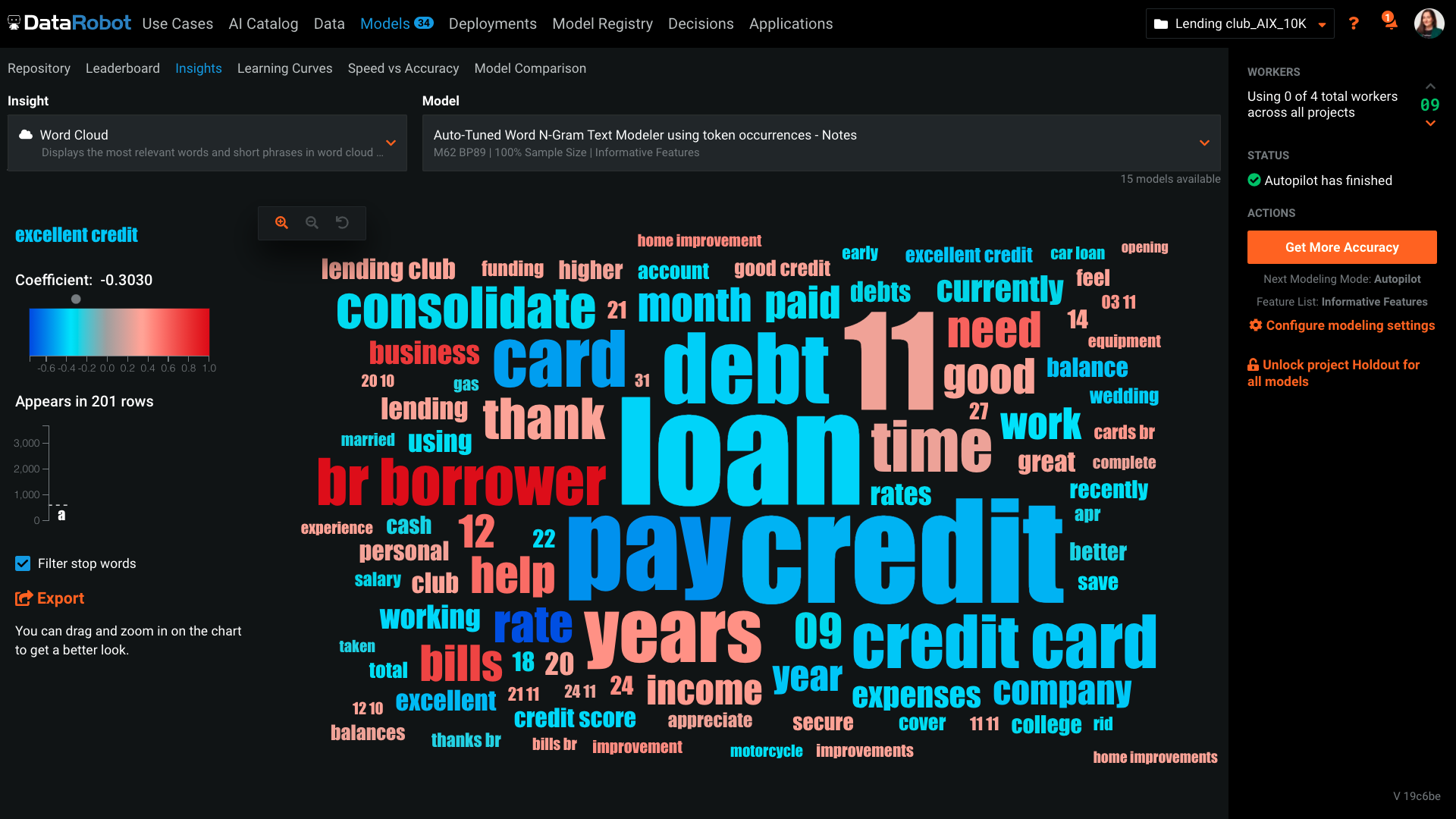
Further improvements to their text analysis tool, to be more like the Qualtrics text analysis tool, would be a great addition. Qualtrics has templates built into their text analysis tool for customer service, quality control, etc, and will automatically slot your text responses into categories associated with certain sub areas of those larger categories.
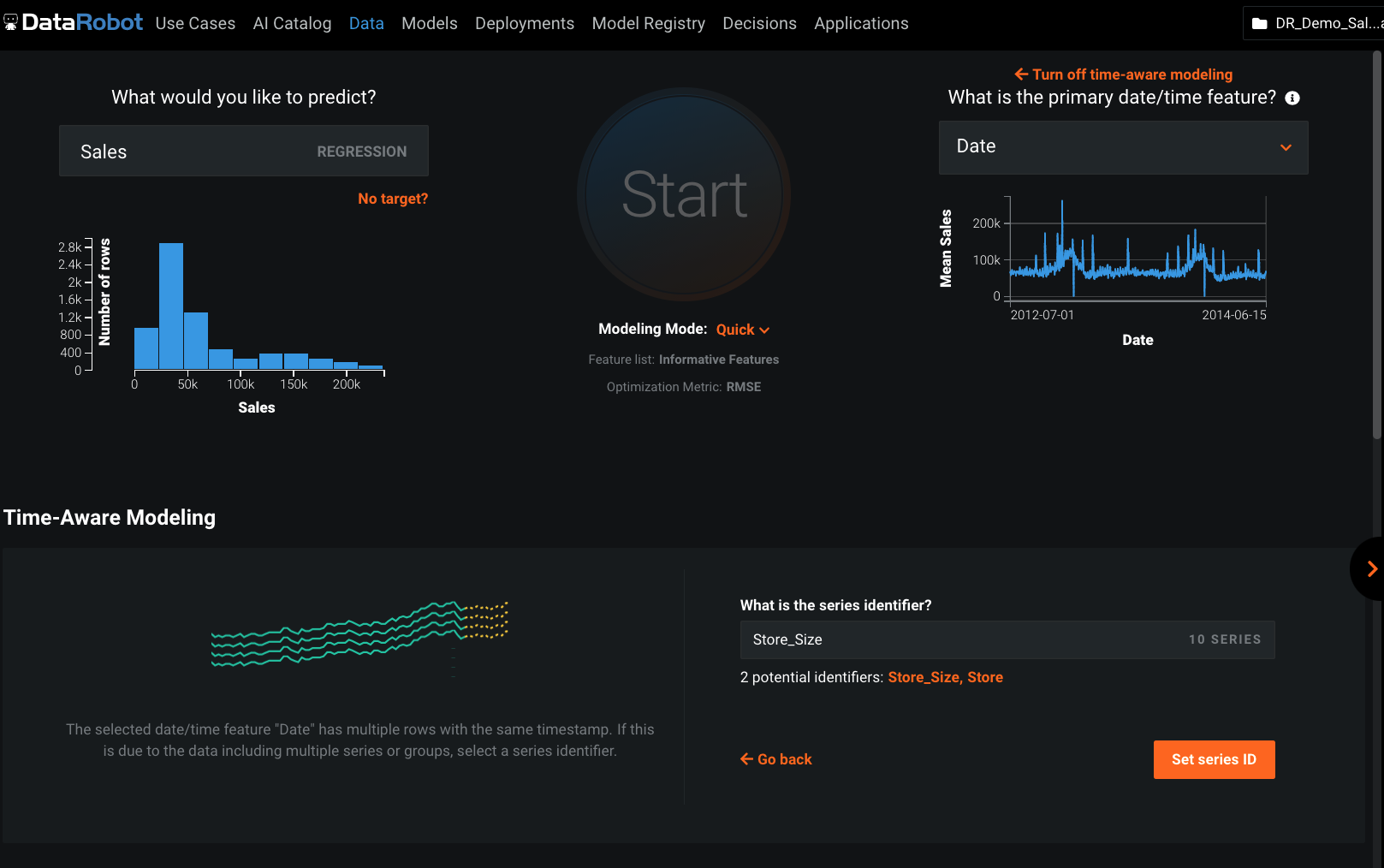
DataRobot presents a machine-learning platform designed by data scientists from an array of backgrounds, to construct and develop precise predictive modeling in a fraction of the time previously taken. The tech invloved addresses the critical shortage of data scientists by changing the speed and economics of predictive analytics. DataRobot utilizes parallel processing to evaluate models in R, Python, Spark MLlib, H2O and other open source databases. It searches for possible permutations and algorithms, features, transformation, processes, steps and tuning to yield the best models for the dataset and predictive goal.
As I am writing this report I am participating with Datarobot Engineers in an complex environment and we have their whole support. We are in Mexico and is not common to have this commitment from companies without expensive contract services. Installing is on premise and the client does not want us to take control and they, the client, is also limited because of internal IT regulations ,,, soo we are just doing magic and everybody is committed.
The use of this software does not necessarily follow that it is "globally better" than others. In the department we have used this and others with similar characteristics, given that, as previously indicated, all the software has advantages and weaknesses with respect to other software with similar characteristics. Obtaining better results lies in the user's ability to detect those "benefits and weaknesses" and maximize their usefulness within the specific field of work in which they operate. In our case, one of the reasons that led us to try and use it, was related to trying to "tie" more processes to the same environment, which in this case is the one associated with the Excel database, in such a way as to reduce the initial manipulation and accommodation that should be made to the data if they come from different sources such as MATLAB, or WinQsb. This facilitates the use of software for the type of user who does not necessarily have deep knowledge of linear algebra or operations research, for example.
On the contrary, the most analytical and knowledgeable user manifested in a high percentage, preferring to use MATLAB as a tool, claiming that they have a greater and easier access to the calculation functions, which even in specific cases, could be modified.
I've done machine learning through python before, however having to code and test each model individually was very time consuming and required a lot of expertise. The data Robot approach, is an excellent way of getting to a well placed starting point. You can then pick up the model from there and fine tune further if you need.
- It has allowed finding ways to optimize (minimizing costs or times) the field processes involved in various projects.
It has even allowed, in specific cases where it was used for that purpose, to optimize the allocation of resources (people) to work in different jobs that present weekly variations of the activity that these people must perform.
It has allowed the sensitivity analysis of projects to changes in the decision variables related to them, which, and in very dynamic and changing environments, resulted in substantial decreases in money losses.