Amplitude Analytics is an analytics platform for mobile and web. It is designed to help organizations segment users and analyze funnels, retention and revenue. Amplitude Analytics helps product marketers to achieve actionable insights from customer digital journeys and uses behavioral graphs to build customer-focused products. Amplitude also optimizes digital products for increased quality engagements, increased conversion rates, and long-term customer loyalty.
$49
per month (paid annually)
Treasure Data
Score 9.0 out of 10
Mid-Size Companies (51-1,000 employees)
Treasure Data is an enterprise customer data platform (CDP) that reclaims customer-centricity in the age of the digital customer. It does this by connecting all data and uniting teams and systems into one customer data platform to power purposeful engagements.
N/A
Pricing
Amplitude Analytics
Treasure Data
Editions & Modules
Plus
$49
per month (paid annually)
Growth
Contact Sales
Enterprise
Contact Sales
Starter
Free
No answers on this topic
Offerings
Pricing Offerings
Amplitude Analytics
Treasure Data
Free Trial
No
No
Free/Freemium Version
Yes
No
Premium Consulting/Integration Services
No
No
Entry-level Setup Fee
No setup fee
Optional
Additional Details
—
—
More Pricing Information
Community Pulse
Amplitude Analytics
Treasure Data
Best Alternatives
Amplitude Analytics
Treasure Data
Small Businesses
StatCounter
Score 9.0 out of 10
Bloomreach - The Agentic Platform for Personalization
Score 8.5 out of 10
Medium-sized Companies
Siteimprove
Score 10.0 out of 10
Bloomreach - The Agentic Platform for Personalization
Score 8.5 out of 10
Enterprises
Quantum Metric
Score 8.0 out of 10
Bloomreach - The Agentic Platform for Personalization
I would highly recommend Amplitude to people in the product and business analytics domains who have a need for deep, data-driven insights into customer behavior, accessible in a self-service platform. Amplitude stands out in its comprehensiveness and flexibility; once events are implemented, there are a multitude of options to combine, track, form journeys, and dive deeper into user behavior. Though the barrier for entry is a little bit steep, Amplitude is more friendly to non-technical users than other business insight platforms, without compromising the effectiveness of the analysis tools. Amplitude may not be best suited for web marketing analytics - traffic, page views, etc - since it is more focused on full-platform product analytics.
Any time you need to process and store very large volumes of data at scale, Treasure Data will aways be at the forefront of my mind. Especially if the data being handled is constantly changing or evolving, rigid schemas just wont do. Treasure Data has the ability to adapt as your product needs change over time. Having the storage and processing flexibility is a huge win.
It provides me great answers about my critical questionnaire, by which I can easily explore behavioral data across any chart, persona, and cohort that are simple and intuitive to understand as they have made easy segmentation.
It offers its services for SQL queries due to which I have reduced the workload and save the time that was spent in finding out the technical aspects.
CDP provides a unified view of data from all touchpoints in the customer journey until a single customer uses the service. This feature is very helpful in making service decisions and direction.
It provides a variety of extensions to bring your data together in one place and helps you do this easily.
Kits provided by Treasure Box provide basic but helpful methods for further development of services.
Pricing is a bit of a black box. We are currently priced on split hour usage and some spikes come out of nowhere and leave us seeking answers (and sometimes finding unsatisfactory ones).
Some jobs will fail, causing workflows to be interrupted due to a product change or a one-time product related issue. We usually contact Support in these cases, and while they are incredibly responsive and helpful, it would be great to have more proactive communication.
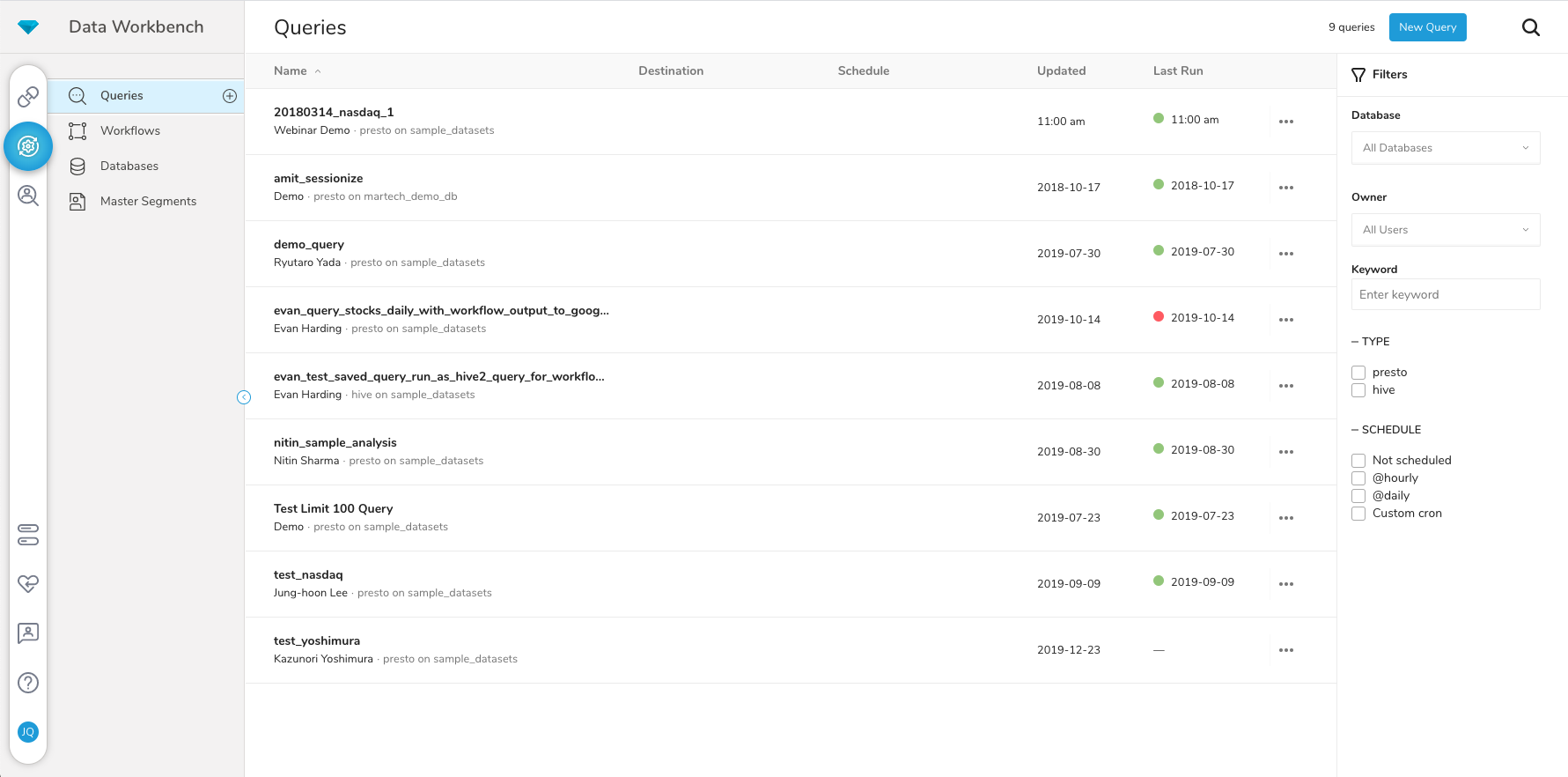
Treasure's UI leaves us wanting more in terms of organization and controls, especially as we scale and grow the number of data sources, queries, and workflows.
Great product Good value for the cost/initiate Support docs and FAQs are great - they limit the necessity of reaching out to in-person support. So when you do call them ... it is for a legit question/issue, no just a "where is it" or a "how to I do xyz123?"
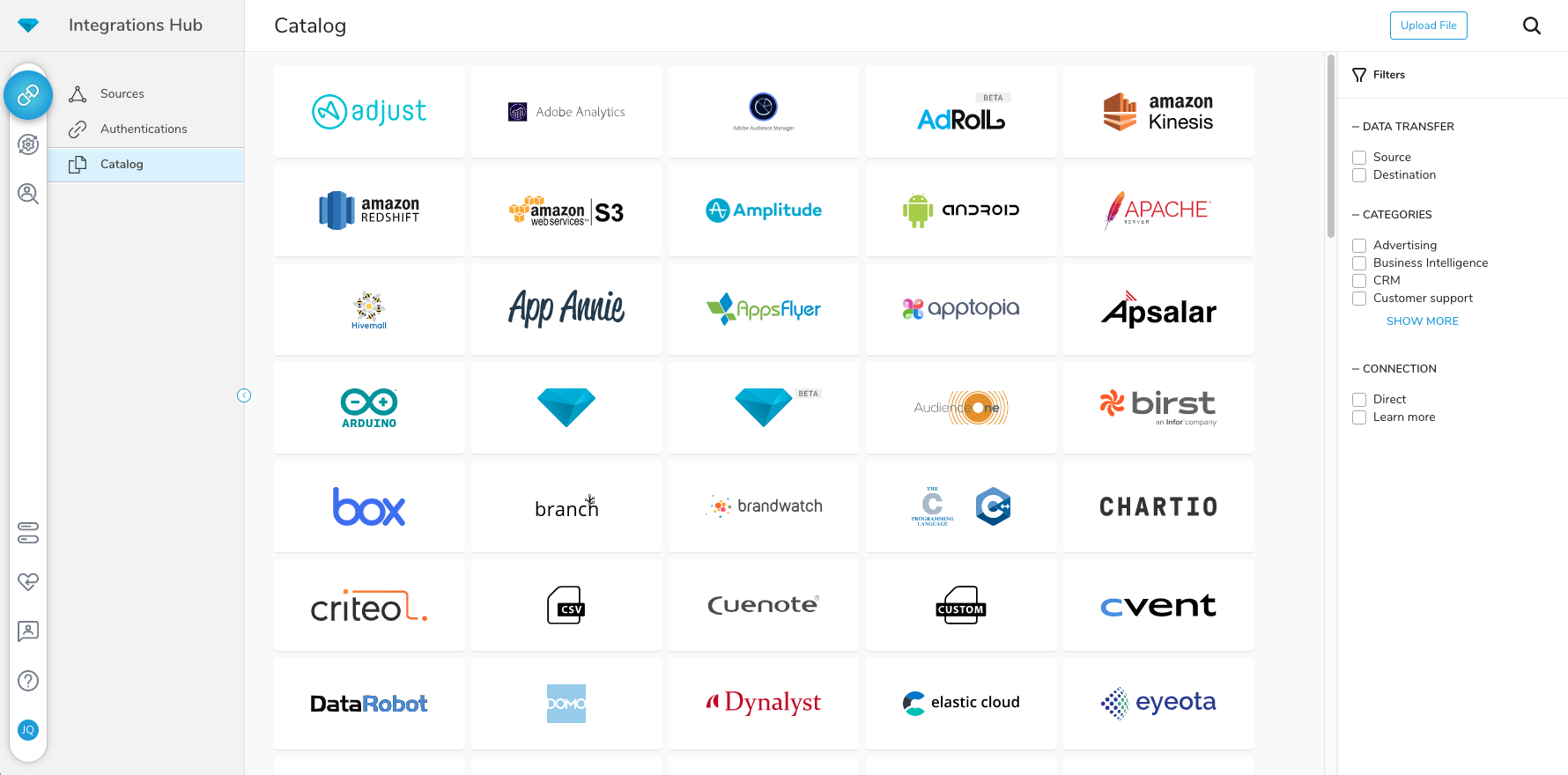
Because treasure data is a great platform with a great support team behind, it's a scalable solution that deals well with huge amounts of data every day and has a huge catalog of integrations that can be easily use to download data from several platforms, like aws s3, redshift, google bigquery.
It's a fairly straightforward platform that's beginner friendly. The biggest usability hurdle is most often created by your own team, as it's imperative to know what event sources are being sent to Amplitude and what those event names are. Within being properly onboarded by a team member it can be hard to get started using Amplitude. It takes time to understand what data your company may be sending to the product, the naming conventions of events (especially if there are old or deprecated events names
If you are a data person, you will likely understand the product and how to use it well. We did find that some of our queries run into memory issues though. If you are a marketer and want to build easy audience segments, I am not sure how easy it will be for you. We are still working through this.
Alway up and running, or if there is a problem we can get back in the game right away. The reliability was a big selling point for me, and it was true when this company got it. Rollouts can be tough, but this was pretty seamless. Good support throughout the process, good documentation to handle questions/tips
As treasure data has a 24 hours support, every time we has big issues that impacts the zones, we do have immediatly support from the treasure data team, so I would say that we do not have any issues with availability
No issues, problems, or negative remarks from us!! We had a plan, vendor support was rock solid, our data folks have experience, OCM supported as needed, and we got the rollout done on time, on budget, and with only minor hiccups. SInce the rollout, most of us have already forgotten the hiccups and generally speak highly of the product
Since treasure data has started having a huge amount of data, sometimes we do have problems with the workflows logs because we generate a lot of then. But with integrations I have not to complain, its really easy to integrate with other platforms.
I haven't used the Amplitude support other than their training docs so I can't speak too much to the in-person support but the docs are serviceable. Nothing too crazy but between the user tips, email notifications, and the decent number of docs I was able to get the support I needed to ramp up on the tool.
The technical team has a good hold on the nuances of the data related to our organization. I have found the online technical support on their site quite responsive including the L1 support. In cases where the L1 team isn't able to resolve, I have found they are prompt in getting the product team's input to get a quick resolution.
Virtual Not bad considering the timeframe and turnaround. The biggest benefit was for my end-users to hear a voice (other than mine/ours! LOL) telling them about the new features and capabilities. The in-person training was really good for having an expert that knows the answers and could refer to past experiences, problems, solutions. THey were a great resource to ease the transition ... basically a "you are gonna be okay with this change ... you got this etc.!" kinda vibe
Good enough to get strong baseline. I always make sure our our users go to and/or focus on the vebndor-provided support docs rather than any formal training. Our instructors come and go, but written policy and how-to docs live much longer in a corporate setting. That said, the online training is sufficient. I like that the training curric is stacked and progressive.
I wasnt here at the training in the start, but I had a few training with treasure data for a few functionalities, and they provided me god explanations and great documentations, eve if the project were in beta.
My team members all have background as data analysts, so Amp was pretty easy to for them. There was sufficient online training available. We also used the available support documents. The actual rollout went well. We did significant testing beforehand. We did a phased rollout, with partial silent rollout (part of OCM's plan) for the smallest line of business. THe silent one was "silent" b/c it was done without fanfare or public notices ... it was just a "we're doing some things, it wont impact your work or workday
Amplitude Analytics is a robust platform that can take your data reporting beyond what's currently capable in GA. Heap is a great intermediate tool, that takes data analysis a step further and is an excellent product in it's own right. Mixpanel is the most comparable both have very similar reporting/dashboarding functionality. Amplitude can often be preferred by product and data engineering teams for it's ease of setup and impressive analytics displays.
Both Tealium and Evergage are mostly focused on online sources. They don't have as easy or robust data model capability to ingest CRM, e-commerce, or offline data. Bluevenn has good identity resolution like TD, but the Unify data processes/model are not exposed to the customer to modify or develop data load workflows.
Like all the other grades, it was mostly an easy implementation ... we have experience people, the rollout in general is well planned, and the vendor was very supportive
When there are Treasure Data updates, there might be old functions that are deprecated or existing functions which no longer work as before --> this may have impact on existing workflows/queries
As many developers are working on the same environment, the jobs are queued because there is a limited amount of computation cores available --> if we want to increase it, our client needs to pay for more cores
As data are increasing, some workflows are too expensive and need to be rethought / made more efficient --> this means re-designing existing workflows and also requires constant support from Treasure Data which analyzes the queries and identifies points of improvement that allows client to pay less