
Amazon RDS Performance Insights vs. Splunk Observability Cloud
Amazon RDS Performance Insights vs. Splunk Observability Cloud
| Product | Rating | Most Used By | Product Summary | Starting Price |
|---|---|---|---|---|
 Amazon RDS Performance Insights | N/A | Amazon RDS Performance Insights is a database performance tuning and monitoring feature that helps to asess the load on a database, and determine when and where to take action. Performance Insights helps non-experts to detect performance problems with a dashboard that visualizes database load. Performance Insights uses lightweight data collection methods that don’t impact the performance of your applications, and makes it easy to see which SQL statements are causing… | $0.01 per 1,000 requests. | |
 Splunk Observability Cloud | N/A | Splunk Observability Cloud aims to enable operational agility and better customer experience through real-time AI-driven streaming analytics allowing accurate alerts in seconds. It is designed to shorten MTTD and MTTR by providing real-time visibility into cloud infrastructure and services. | $180 per year per host |
| Amazon RDS Performance Insights | Splunk Observability Cloud | |||||||||||||||
|---|---|---|---|---|---|---|---|---|---|---|---|---|---|---|---|---|
| Editions & Modules | No answers on this topic |
| ||||||||||||||
| Offerings |
| |||||||||||||||
| Entry-level Setup Fee | No setup fee | No setup fee | ||||||||||||||
| Additional Details | — | — | ||||||||||||||
| More Pricing Information | ||||||||||||||||
| Amazon RDS Performance Insights | Splunk Observability Cloud |
|---|
| Amazon RDS Performance Insights | Splunk Observability Cloud | |
|---|---|---|
| Small Businesses | No answers on this topic |  InfluxDB Score 8.8 out of 10 |
| Medium-sized Companies |  LogicMonitor Score 8.4 out of 10 |  Sumo Logic Score 9.4 out of 10 |
| Enterprises | LogicMonitor Score 8.4 out of 10 |  NetBrain Technologies Score 9.2 out of 10 |
| All Alternatives | View all alternatives | View all alternatives |
| Amazon RDS Performance Insights | Splunk Observability Cloud | |
|---|---|---|
| Likelihood to Recommend | 9.0 (1 ratings) | 8.6 (24 ratings) |
| Likelihood to Renew | - (0 ratings) | 6.4 (1 ratings) |
| Usability | - (0 ratings) | 7.3 (1 ratings) |
| Amazon RDS Performance Insights | Splunk Observability Cloud | |
|---|---|---|
| Likelihood to Recommend |  Amazon AWS
|  Cisco
|
| Pros | Amazon AWS
| Cisco
|
| Cons | Amazon AWS
| Cisco
|
| Likelihood to Renew | Amazon AWS No answers on this topic | Cisco
|
| Usability | Amazon AWS No answers on this topic | Cisco
|
| Support Rating | Amazon AWS No answers on this topic | Cisco
 Giuseppe Cusello GRC Director |
| Implementation Rating | Amazon AWS No answers on this topic | Cisco
Giuseppe Cusello GRC Director |
| Alternatives Considered | Amazon AWS
| Cisco
 David Williams CIO (Chief Information Officer) |
| Return on Investment | Amazon AWS
| Cisco
|
| ScreenShots | Splunk Observability Cloud Screenshots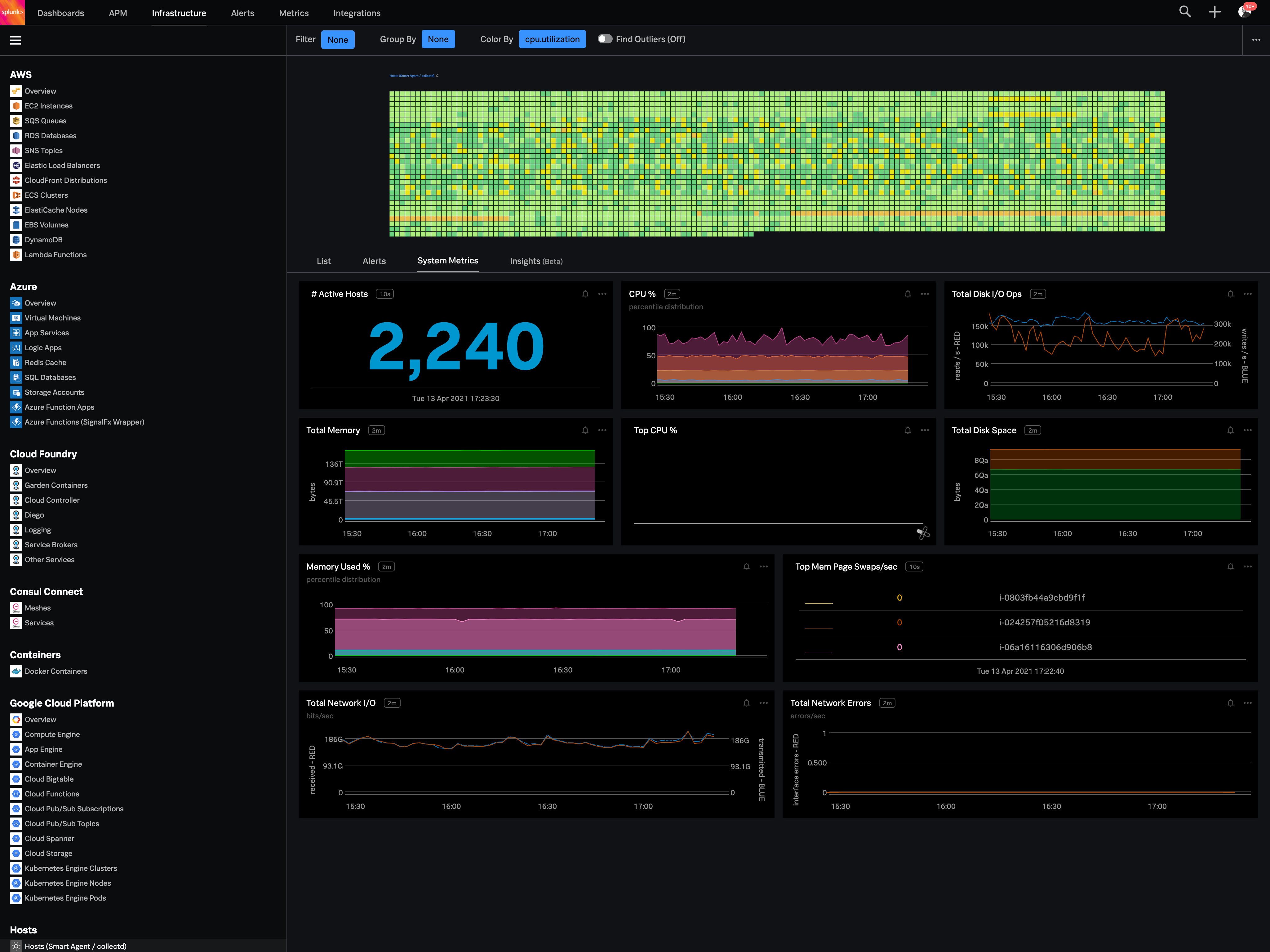 |