To help advertisers understand how their marketing performs across media such as search, display, video, and audio, Amazon Advertising is introducing Amazon Marketing Cloud (AMC)—a holistic measurement and analytics solution currently in beta for eligible advertisers. AMC is built on Amazon Web Services (AWS).
N/A
Terminus ABM Platform
Score 8.0 out of 10
Mid-Size Companies (51-1,000 employees)
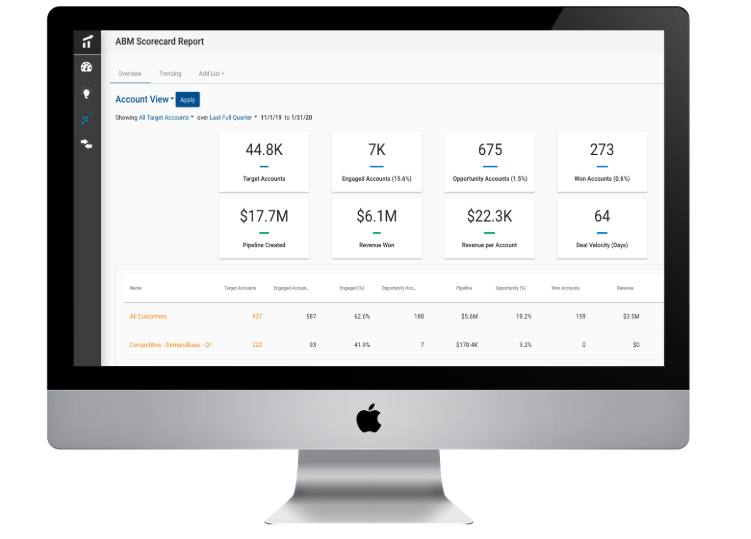
Supporting B2B strategies, the Terminus platform offers tactical playbooks that help teams meet accounts throughout their entire lifecycle. It is a platform rooted in first-party data that surrounds buyers with engaging digital experiences from account acquisition to expansion and renewal. The Terminus engine is built to drive ROI, minimize fraud, prioritize brand safety, and turn intent into relevant, actionable insight for GTM teams. Key benefits of Terminus: - Relevant…
If you notice that a certain ad is performing well during a flash sale and want to increase the budget immediately, Amazon Marketing Cloud won’t provide real-time data. You’ll have to use Amazon Ads Manager instead. Example is that with me client has a low ad budget or a small number of customers, Amazon Marketing Cloud might not provide enough data to give you meaningful trends or recommendations. If you find a group of high-value customers using Amazon Marketing Cloud, you can’t just click a button to target them directly in Amazon DSP. Instead, you have to manually export the data and upload it elsewhere.
I really love working with the team. If you are looking to get more targeted in your advertising approach, leverage intent data & have your sales team utilize this data for a more personalized experience - that is the best-case scenario. You do need to invest quite a bit into your advertising to be able to gather data & see [the] influence, so if your AOV would be impacted drastically by this cost, I would not recommend using the advertising experiences and chat experiences until you can invest more.
Event Announcements. We use Sigstr to promote hosted and co-hosted events. Email recipients can click on the Sigstr to register for the event itself. By promoting events through Sigstr we have been able to increase event registration and attendance.
Content Sharing. New blog post, webinar, presentation, infographic... you name it, you can use Sigstr to promote it. Furthermore, you can personalize the content to target different audiences based of the sender group. Example: customer content Sigstr belongs to support, while marketing new business content belongs to sales.
Announcements. Product enhancements, Company news etc. You can use Sigstr to promote general announcements relevant to the audience.
They recently purchased some new solutions that are being integrated into the platform so once that is completed it will be a much more robust solution.
I think updating what is considered high value vs brand awareness on the spike report could be a little more seamless.
For Salesforce integration, Terminus information unfortunately doesn't pull in historically, it just shows what has happened since the integration started. I think it's unfortunate because that historical data tells us a lot.
Terminus is a turn-key partner in the B2B Account-Based Marketing space. Their model is flexible and efficient which in turn provides effective results. Their sales staff is great and never tries to up-sell, but rather coach and educate our teams to be better at our jobs. It has been great to collaborate
likely because while it offers powerful insights, it has challenges in ease of use. Amazon Marketing Cloud requires SQL knowledge for queries, making it difficult for non-technical users. Unlike traditional marketing tools with simple dashboards, Amazon Marketing Cloud demands manual data extraction and analysis, slowing down decision-making. Another usability challenge is the lack of real-time data, which makes it hard to optimize campaigns instantly. If you want to adjust ad spend based on immediate performance, Amazon Marketing Cloud’s batch processing delays insights. Additionally, there’s no direct audience activation, meaning you have to export data manually instead of seamlessly applying insights within Amazon DSP. However, Amazon Marketing Cloud is highly valuable for in-depth analysis, audience segmentation, and attribution modeling. With better user-friendly features like pre-built reports, automation, and real-time analytics, usability could improve significantly, making it easier for businesses to maximize its potential.
I have compared Google Ads Data Hub and Meta's Advanced Analytics with Amazon Marketing Cloud. Amazon Marketing Cloud is most notable for its insights into the deep Amazon ecosystem, Google for cross-platform tracking, and Meta for extensive social engagement analysis. AMC's privacy-safe query-based model is powerful but SQL-skilled, in contrast to Google's more accessible UI.
It's a great all-around platform. With each of these ABM vendors, you have to pay for all the bells and whistles they offer. Terminus ABM Platform "base" packages include everything you need to get started and you can add on bits and pieces like chat, email or personalization as your organization continues to mature through their ABM journey.
It's EXTREMELY hard to assess total ROI with display advertising unless you're getting clicks on your ads. Even then you probably want additional tracking metrics such as Google Analytics, form fills, etc.
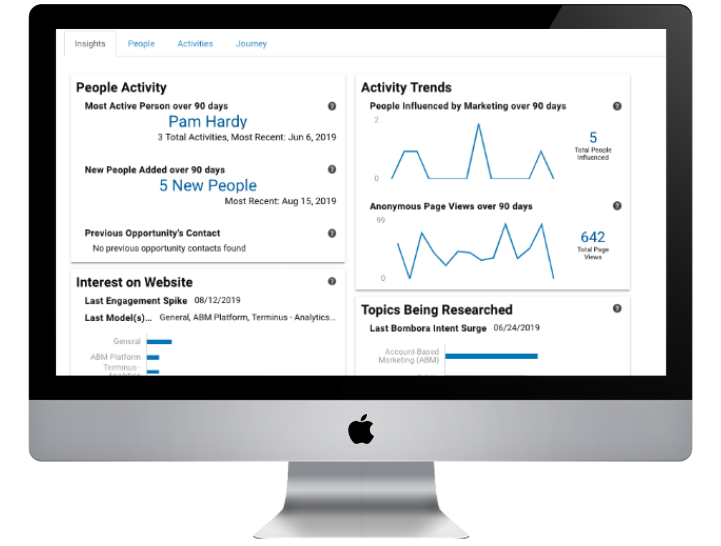
Our sales guys like the engagement spike reports, which can be useful for prompting them to reach out to their contacts.