
Amazon Marketing Cloud vs. Chartbeat
| Product | Rating | Most Used By | Product Summary | Starting Price |
|---|---|---|---|---|
 Amazon Marketing Cloud | Score9.1 out of 10 | N/A | To help advertisers understand how their marketing performs across media such as search, display, video, and audio, Amazon Advertising is introducing Amazon Marketing Cloud (AMC)—a holistic measurement and analytics solution currently in beta for eligible advertisers. AMC is built on Amazon Web Services (AWS). | N/A |
 Chartbeat | Score6.9 out of 10 | N/A | Chartbeat delivers real-time analytics, insights, and transformative tools for content teams around the world, to help improve audience engagement, inform editorial decisions, and increase loyalty. | N/A |
| Amazon Marketing Cloud | Chartbeat | |||||||||||||||
|---|---|---|---|---|---|---|---|---|---|---|---|---|---|---|---|---|
| Editions & Modules | No answers on this topic | No answers on this topic | ||||||||||||||
| Offerings |
| |||||||||||||||
| Entry-level Setup Fee | No setup fee | No setup fee | ||||||||||||||
| Additional Details | — | Chartbeat pricing is based on monthly site page views. Discounts are applied to multi-year contracts. The Basic Plan includes the Real-time Dashboard, Historical Dashboard, Heads Up Display, Reports, Big Board, iOS and Android app, and Real-time API endpoints. The Plus Plan includes all of the Basic Plan features, plus ONE of the following Premium features: Headline Testing, Advanced Queries, or Multi-Site View. The Premium Plan includes all of the Basic Plan features, plus ALL Premium features: Headline Testing, Advanced Queries, Multi-Site View, and enterprise-level support and custom trainings. | ||||||||||||||
| More Pricing Information | ||||||||||||||||
| Amazon Marketing Cloud | Chartbeat | |
|---|---|---|
| Considered Both Products | No answer on this topic | No answer on this topic |
| Key User Insights | ||
| Would buy again | ||
No answers on this topic | 98% Would buy again 47 Answers | |
| Delivers good value for the price | ||
No answers on this topic | 100% Delivers good value for the price 21 Answers | |
| Happy with the feature set | ||
No answers on this topic | 96% Happy with the feature set 46 Answers | |
| Lived up to sales and marketing promises | ||
No answers on this topic | 100% Lived up to sales and marketing promises 20 Answers | |
| Implementation went as expected | ||
No answers on this topic | 100% Implementation went as expected 24 Answers | |
| Amazon Marketing Cloud | Chartbeat | ||||||||||||||||||||||||||||
|---|---|---|---|---|---|---|---|---|---|---|---|---|---|---|---|---|---|---|---|---|---|---|---|---|---|---|---|---|---|
| Web Analytics |
| ||||||||||||||||||||||||||||
| Amazon Marketing Cloud | Chartbeat | |
|---|---|---|
| Small Businesses |  Agency Analytics Score9.9 out of 10 |  StatCounter Score9 out of 10 |
| Medium-sized Companies |  Supermetrics Score10 out of 10 |  Siteimprove Score10 out of 10 |
| Enterprises |  TrackMaven Score8.5 out of 10 |  Alexa Internet (discontinued) Score7.9 out of 10 |
| All Alternatives | View all alternatives | View all alternatives |
| Amazon Marketing Cloud | Chartbeat | |
|---|---|---|
| Likelihood to Recommend | - | 8.6 |
| Likelihood to Renew | - | 9.9 |
| Usability | - | 7.8 |
| Support Rating | - | 8.1 |
| Amazon Marketing Cloud | Chartbeat | |
|---|---|---|
| Likelihood to Recommend |
|
|
| Pros |
|
|
| Cons |
|
|
| Likelihood to Renew | No answers on this topic |
|
| Usability |
|
|
| Support Rating | No answers on this topic |
|
| Alternatives Considered |
|
|
| Return on Investment |
|
|
| ScreenShots | Chartbeat Screenshots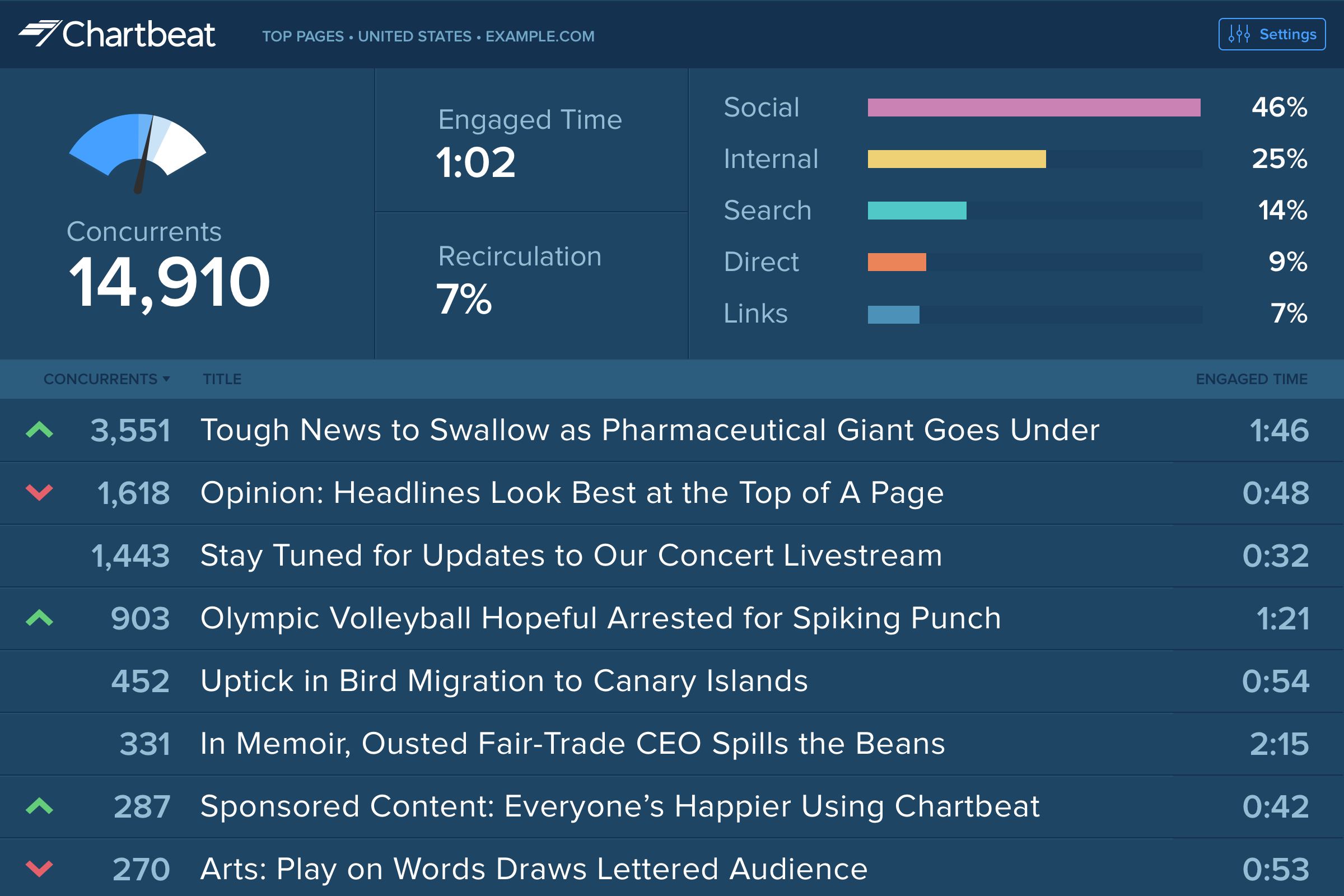 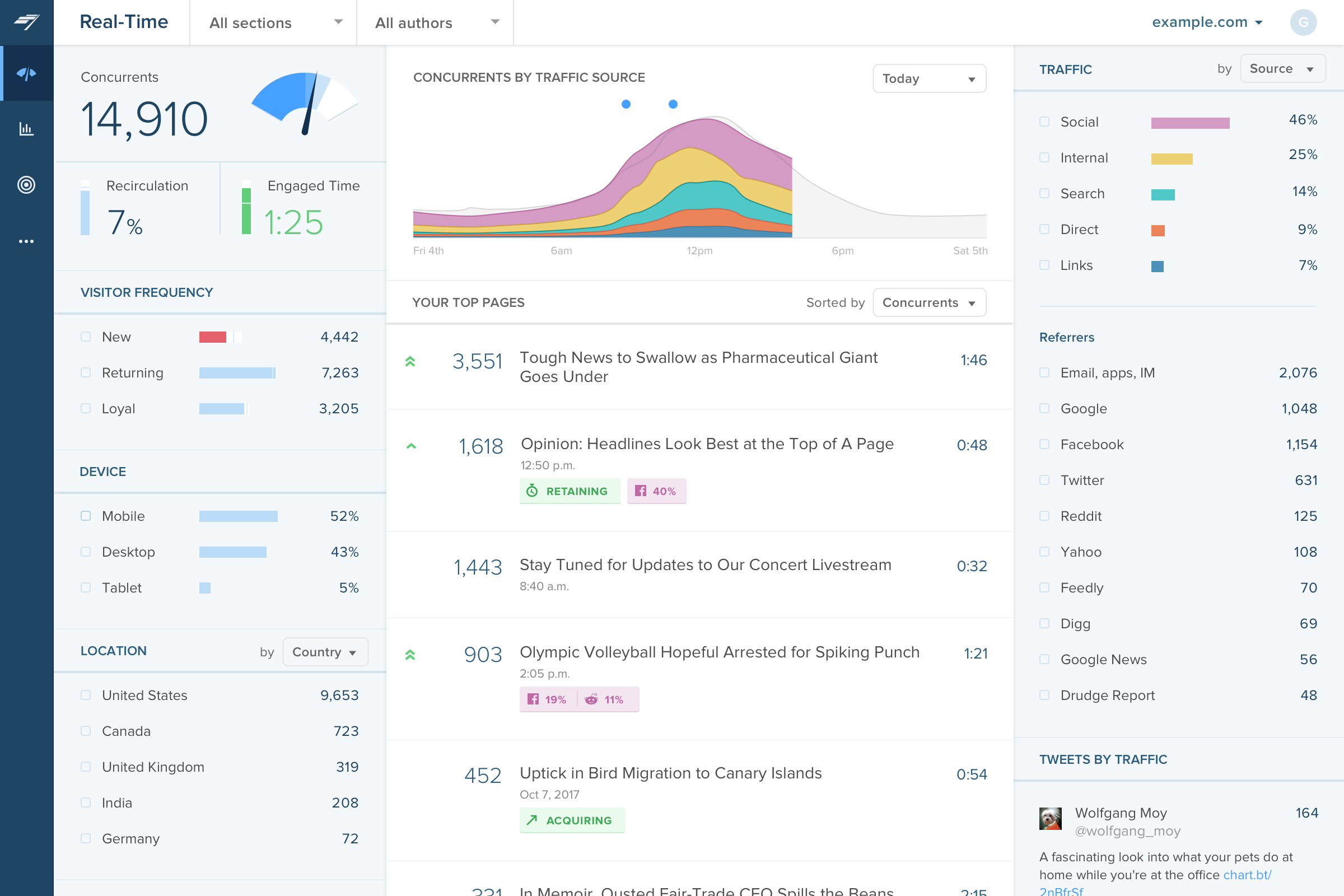     |


