Action1 is an autonomous endpoint management platform that is cloud-native, scalable, and configurable in 5 minutes. It is free for the first 200 endpoints, with no functional limits. By pioneering autonomous OS and third-party patching - AEM’s foundational use case - through peer-to-peer patch distribution and real-time vulnerability assessment without needing a VPN, it eliminates costly, time-consuming routine labor, preempts ransomware and security risks, and protects the digital…
N/A
Ivanti Endpoint Manager
Score 6.9 out of 10
N/A
Ivanti Endpoint Manager increases user and IT productivity by helping IT administrators gather detailed device data, automate software and OS deployments, and quickly fix user issues.
For small teams having to deal with significant ammount of devices, I can't express how useful Action1 is. With very small effort, you can easily keep track of your devices, keep them up to date, deploy new software to your users, create recurring reports/alerts and so on. Initially, the 100 endpoints for free was also a nice touch. Now, even better since they increased to 200. For the forseeable future, I have not to worry about costs and still can't believe it's a full solution for free, not those freeware stuff where what you really desire is behind a cost.
You need to push O365 or some product out to your institution. If you need to build out a reboot before and after and maybe something else, [Ivanti Unified Endpoint Manager (formerly LANDESK Management Suite)] can easily do that for you. It then can also use a query to determine who needs that product in your environment and then continue using that query to watch for the machines you targeted to show up once your push succeeded. If you need to, you can use the task scheduler and schedule your software distribution for a specific not in normal business hours or on a weekend.
Software distribution - the ability to sit and provide software when a machine calls home works phenomenally well. You may also target based on certain conditions, ranging from LDAP queries down to hardware revisions of individual components.
Operating system provisioning - the range of choice in sequential execution is second to none. We migrated from MDT to Ivanti's providing with relative ease.
Patching and compliance - you're able to get extremely granular, and the rollout project templates make rolling it a particular patch from QA to Production an automated breeze
Lots of times Action1 will identify a program that needs to be patched, but then not really have a path laid out to get that done...so they just remain as they are, but are tagged as such.
Really wants to replace the windows update mechanism. Resists (or did at least) you if you try to keep updates as they are and update occasionally from Action1
Could develop the scripts section a bit more, looked pretty sparse last time I checked it out.
Mac support - While it's the best I've seen with cross platform support, that doesn't mean they don't have a long way to go to catch up with the functionality of other tools that focus on one specific platform.
Product coherence - Their core product, the management suite, is great but with every new acquisition the company makes, it seems like there's another product that gets shoehorned into the picture. Making all those disparate pieces work smoothly together is something they're still working on.
Documentation - They come out with a lot of great features but some are so complicated I couldn't begin to understand the various facets of it all. I realize the days of published manual are long gone but even a PDF covering the major components in detail would be better than having to bump around in the dark until you have to call support for help.
Software Licensing Management - Every major release seems to completely rewrite this tool but they keep seeming to miss the mark. Lately it's a Microsoft Silverlight program that's very slow and has way too much data to be useful.
Web Console - The web console is all but unusable. The only way to really work on administration is to use the 32bit console which is great if you're running Windows but a fully featured web console would be much preferred.
As Microsoft evolves Intune, SCCM, MECM and combines their features into the MS EULA, Ivanti seems to be going the opposite where they are stripping out core products in favor of an EULA + A la cart pricing model that simply is more expensive than Microsoft's pricing. A few years ago, the gap was large enough to justify the extra cost of Ivanti, today the gap has closed significantly enough that the value add just isn't there for us.
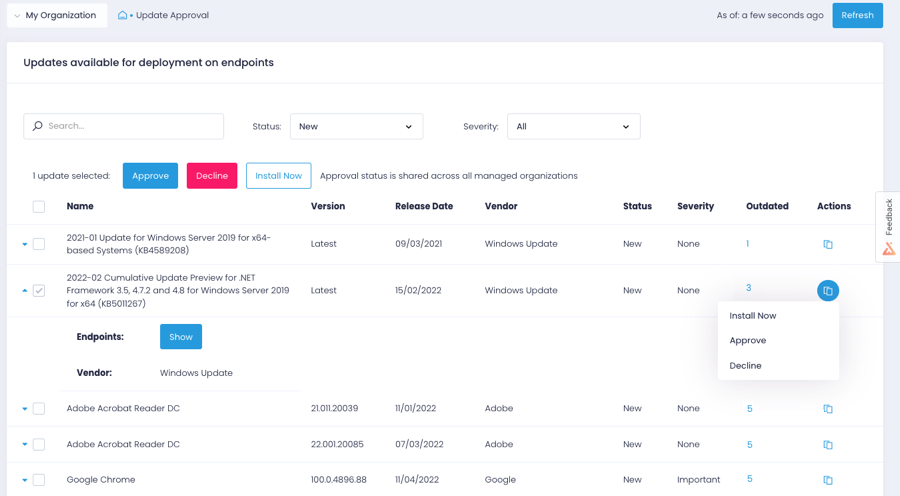
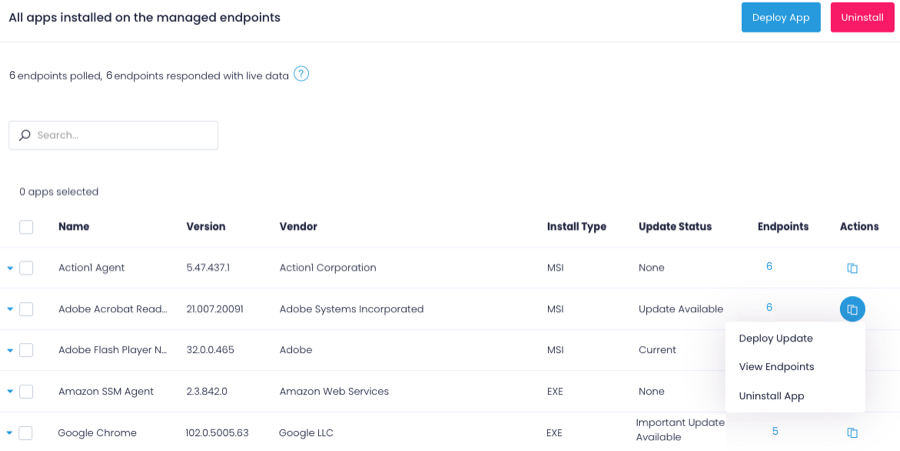
Agent deployment is simple (and silent) - once that is done, you're good to go. Everything is simple, centralized and very easy to work with. There isn't one aspect of this platform that requires crawling over forums and Google, it just works!
Items are logically laid out and most are easy to find. The more advanced stuff can be trickier, but it is still not hard to find. There are a lot of options though, so remembering where some settings are, especially if you do not alter them often, can take a minute, but you will get to them fairly qiickly.
TRM\TAM support has been generally very good. Getting reported bug fixes, design changes, UX problems resolved has been a pain. It is often difficult to get problems escalated beyond the TRM\TAM level. Support is fantastic when you can get it, getting it can often require more work than it should, and that is probably our biggest issue.
After looking at different solutions, Action1 [Cloud Remote Monitoring and Management Solution] was the perfect fit for us that delivered all of the features we wanted without being as costly as some of the others alternatives we've looked at. There was no minimum endpoint count and they even offer up to 50 endpoints for free, which is really great for a small organization like us to help us lower our starting costs and still allows us to grow at our pace without having to commit to a defined amount of endpoints to start.
Better in most all categories. On-prem was not an issue for my organization. MS SCCM was lacking features. Airwatch required increasing tiers of service in order to match [Ivanti Unified Endpoint Manager (formerly LANDESK Management Suite)] features, and lacked the robust inventory data we needed. Meraki was very simple to use, but did not meet our needs. I would say that most Airwatch customers aren't using all the features they are paying for, and could save lots of money by using Meraki instead.
Saved hours per week on patching and able to ensure a 100% patching success rate.
Able to create custom alerting on potential problems as well as able to create some automation to automatically address problems.
Improved support to our remote locations and users.
Custom deployments allow us to have a mechanism to deploy custom applications we build as well as other third party applications we need to distribute.
Centralized IT - all in one solution that is better in some areas than traditional niche software applications. You'll probably still spend the same amount of time with users on the HD line, but you'll be able to reduce the amount of time it takes for auxiliary Help Desk tasks (ticketing, reporting, background deployment, etc.)
Cost - This is a negative of course ;) But at some point you can save some money if you ditch SCCM or your other CRM